Freight shipments stuck at customs because of untreated pallets can blow up your timelines and costs. As global trade surges, the USDA confirms that every wood packaging material entering the United States must meet ISPM 15 standards, be treated, pest-free, debarked, and clearly stamped. Recent data for 2025 shows that the U.S. resumed full enforcement of ISPM 15 for all regulated wood packaging, underscoring how strictly compliance is monitored. Understanding these requirements helps guarantee smooth customs clearance, avoid costly delays or re-packing, and keep supply chains moving fast.
Key Takeaways
ISPM 15 requires heat-treated or fumigated solid wood packaging with a readable stamp for global movement.
Customs delays often occur when pallets are untreated, poorly stamped, or repaired without re-treatment.
Most major regions worldwide enforce ISPM 15, including the US, EU, China, Australia, Mexico, and Canada.
Plastic, engineered wood, and metal pallets offer treatment-free alternatives that move across borders without ISPM 15 rules.
What is ISPM 15?
ISPM 15 is an international rule that protects global ecosystems by regulating how wooden pallets and packaging must be treated before crossing borders. Most countries enforce this standard to keep pests from spreading through untreated or poorly processed wood. Compliance ensures that your shipments avoid unnecessary inspections and maintain consistent clearance times. The standard applies to any exporter or importer using wooden pallets, dunnage, crates, or similar packaging.
Once the purpose of the standard is clear, it helps to break down the actual treatment rules it relies on.
Core ISPM 15 Requirements and Treatments
ISPM 15 requirements outline how wood packaging must be treated and verified before entering international trade.
Here is a structured and scannable overview:
Requirement Category | What It Means | Key Details |
|---|---|---|
Treatment Type | Heat Treatment or Methyl Bromide | Heat Treatment requires wood to reach 56°C at its core for 30 minutes. |
Debarking | Wood must be cleared of bark | Helps reduce pest presence but allows traces smaller than the regulation thresholds. |
Acceptable Materials | Solid wood only | Plywood, OSB, MDF, and plastic pallets are exempt from ISPM 15 regulations. |
Verification Needs | Proof of treatment | Exporters often request a heat-treated pallet certificate from suppliers. |
Stamp Requirement | Official ISPM 15 mark | Must show country code, facility code, and HT or MB code. |
These treatment rules only work when markings are applied correctly, so the next step is understanding how to read the ISPM 15 stamp.
Reading and Verifying the ISPM 15 Stamp
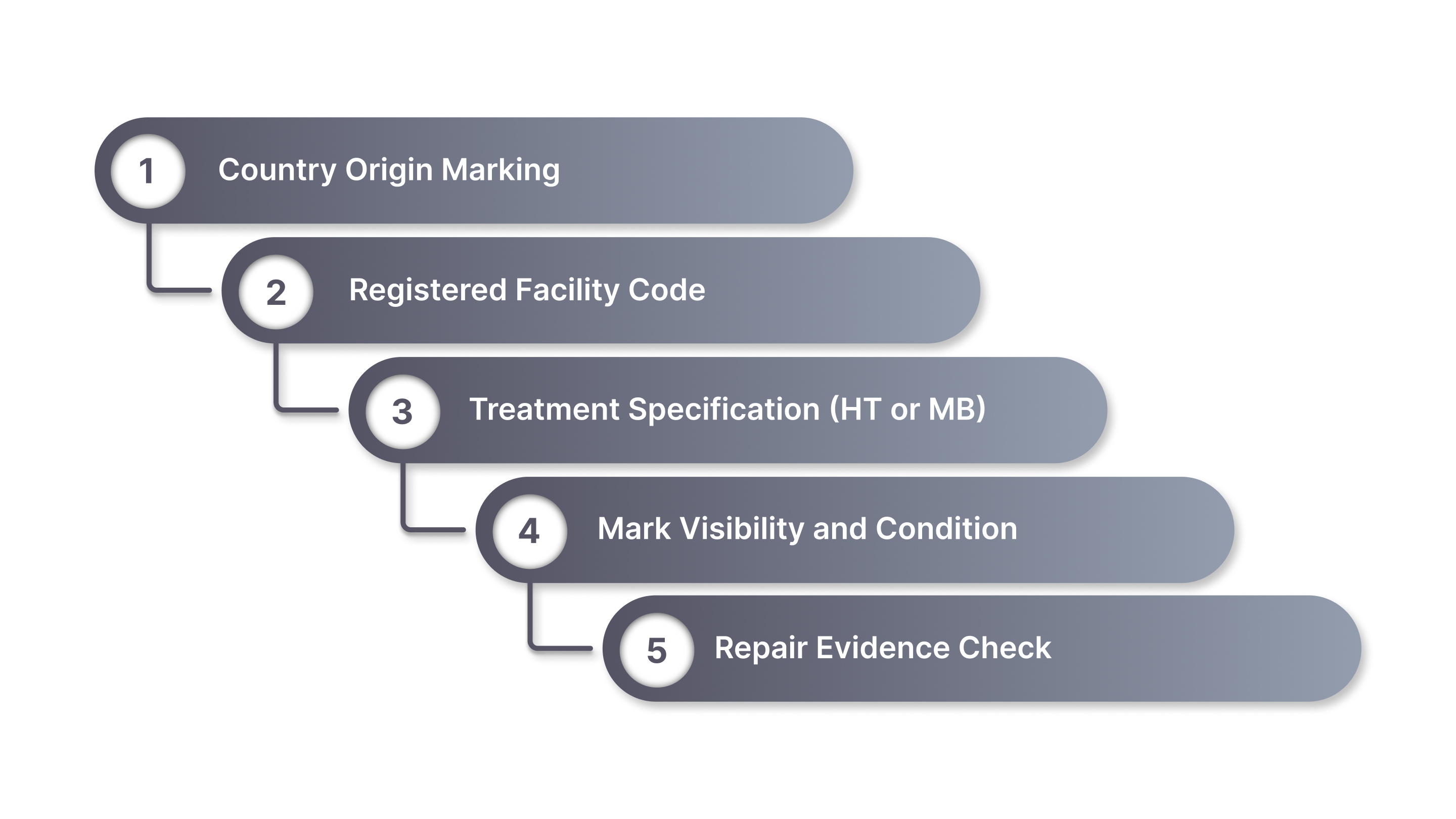
The ISPM 15 stamp shows that a pallet or wood packaging unit has passed approved treatment and qualifies for international movement.
Country Origin Marking: Indicates the national authority responsible for overseeing the wood treatment program followed for your pallet.
Registered Facility Code: Identifies the certified operation that performed the approved treatment used to prepare the wood packaging.
Treatment Specification (HT or MB): Shows whether heat treatment or methyl bromide fumigation brought the material to internationally accepted standards.
Mark Visibility and Condition: Confirms whether inspectors can clearly read the stamp without confusion from fading, smearing, or partial impressions.
Repair Evidence Check: Signals whether any replacement boards bypassed the required treatment, affecting full ISPM 15 compliance status.
Stamp clarity is only part of compliance, and it ties directly into the requirements that importers and exporters must follow.
Import and Export Standards for ISPM 15
ISPM 15 import and export standards help ensure treated wood packaging moves smoothly through international borders without delays.
Here are the most important requirements broken into clear export and import responsibilities:
Export Standards for ISPM 15
Export shipments must use heat-treated pallets properly so your goods meet ISPM 15 requirements for international movement.
Exporters should confirm that each pallet displays a clean ISPM 15 stamp that customs officials can read easily.
Export documentation benefits from including heat-treated pallet certificates when certain destinations request additional verification from you.
Export teams need to inspect repaired pallets carefully because untreated boards immediately create compliance problems for your shipments.
Export processes run more smoothly when you validate that treated pallets remain unchanged after receiving their official ISPM markings.
Import Standards for ISPM 15
Import inspections often review pallet markings closely to ensure your inbound shipments meet required ISPM 15 treatment codes.
Importers should check that stamps match the correct country and facility codes so your compliance records remain accurate and trustworthy.
Import teams must confirm that no unapproved repairs appeared during transit because untreated wood complicates border clearance for you.
Import operations benefit from organizing treatment records well since customs may request proof of ISPM 15 compliance at arrival.
Import risks decrease significantly when you inspect incoming pallets immediately to identify any damaged or unreadable markings.
Compliance becomes more predictable when your team uses a centralized tool like the Procurement Insights Dashboard to track treatment accuracy.
Knowing what the rules demand prepares you for the next question, which is understanding where these rules are enforced worldwide.
Countries That Require ISPM 15 Compliance
Many exporting and importing markets enforce ISPM 15 requirements to protect agriculture and forests.
Here is a clear table of practical insights:
Region | Enforcement Level | Key Notes |
|---|---|---|
North America | Full enforcement | Canada, the USA, and Mexico require heat-treated pallets for cross-border movement. |
Central America | Broad compliance | Most countries require certified wood, and exporters must verify if Central America needs heat-treated pallets. |
European Union | Full enforcement of imports | Movements inside the EU have specific allowances, but imports must meet ISPM 15 standards. |
Asia | Strict in major hubs | China, India, and South Korea require compliant pallets with a verified ISPM 15 stamp. |
Oceania | Highest restrictions globally | Australia and New Zealand apply strong inspections for heat-treated pallets certification. |
South America | Widespread enforcement | Many ports require ISPM 15-compliant wood to prevent pest migration. |
Once the global map becomes clear, it is easier to see why noncompliant shipments create problems at borders.
Risks of Shipping Without ISPM 15 Compliance
Shipping without ISPM 15 compliance leads to costly delays and operational disruptions. Here are the risks to watch out for:
Shipments can be delayed at customs when inspectors discover wood packaging that lacks a clear ISPM 15 stamp.
Border officials may require costly repalletization if they find untreated wood that violates international phytosanitary regulations.
Ports often impose penalties when carriers present non-compliant pallets that fail ISPM 15 requirements for treated timber.
Operational timelines can break down quickly when your cargo enters quarantine due to missing or unreadable pallet markings.
Some countries may reject entire loads when ISPM 15 compliance cannot be verified through stamps or certificates.
These risks are avoidable, and a practical checklist helps keep shipments aligned with what customs expect.
ISPM 15 Compliance Checklist for Exporters
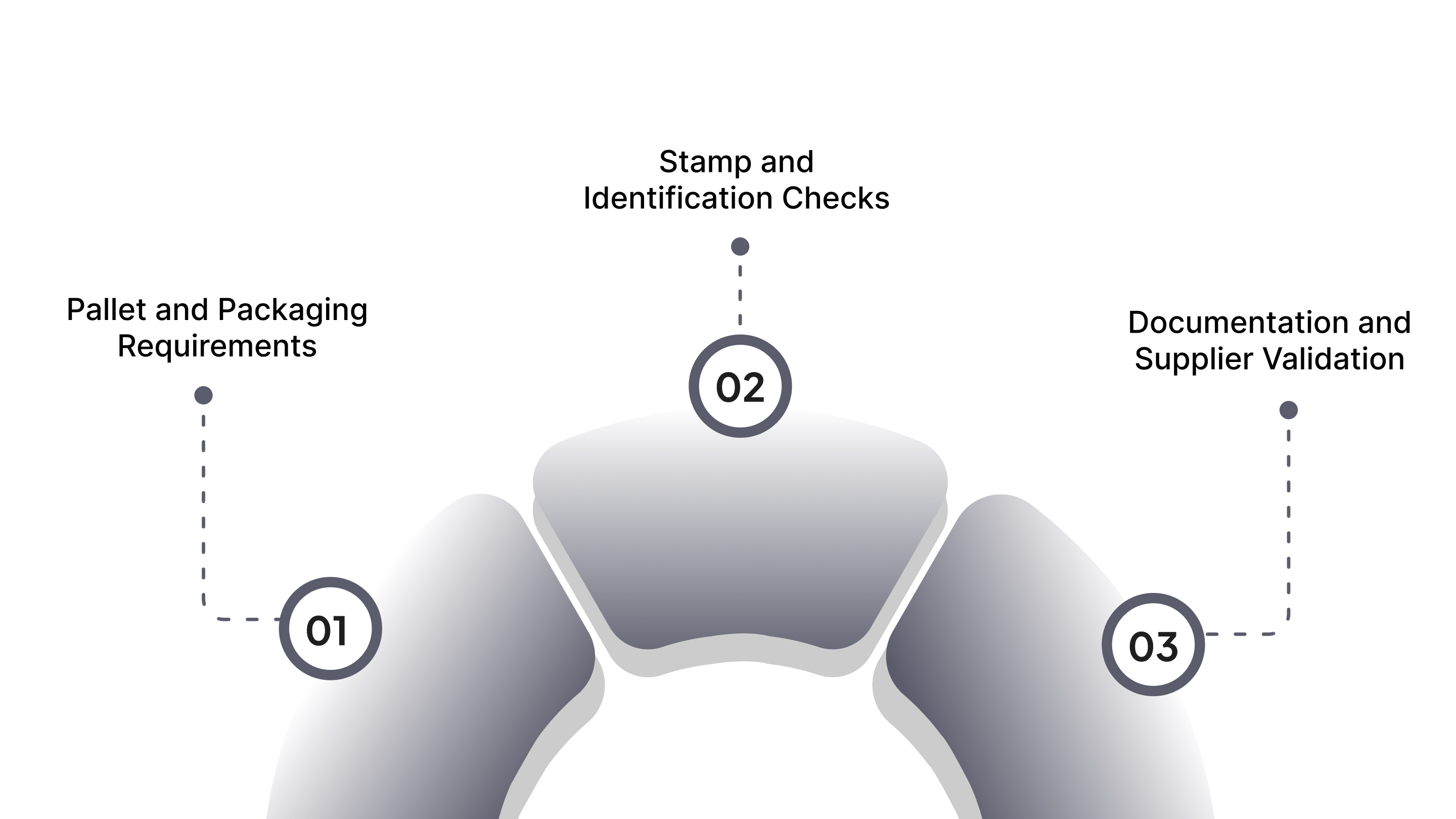
A reliable compliance checklist helps reduce border delays and strengthens your export readiness.
Here is what to verify:
Pallet and Packaging Requirements
Solid wood packaging must be verified as compliant because untreated lumber creates unnecessary compliance risks for you.
Any pallet repairs must be reviewed carefully since replaced boards often require re-treatment before international use.
Destination-specific rules must be checked because several countries demand heat-treated pallets for every inbound shipment you manage.
Stamp and Identification Checks
The ISPM 15 stamp should be inspected closely to ensure you are shipping pallets with valid treatment markings.
Each stamp must display accurate country and facility codes so that authorities can confirm your supply chain integrity.
Pallets should have visible markings on at least two sides when you operate in high-enforcement jurisdictions.
Documentation and Supplier Validation
Treatment certificates may be required at some ports, so requesting documentation helps you avoid unexpected clearance issues.
Shipment records should be organized well so your compliance trail remains verifiable during customs inspections.
Supplier credentials must be validated carefully to confirm that your pallets originate from certified treatment facilities.
Get started with Meridian’s Automated RFQ Platform to simplify export compliance and secure fully verified ISPM 15-compliant shipments.
Some supply chains, however, prefer packaging options that remove ISPM 15 considerations entirely, which opens the door to several alternatives.
Alternatives to ISPM 15 Wood Packaging
Some operations prefer materials that do not require ISPM 15 treatment or certification. These alternatives work well when you want simpler customs movement or more predictable performance in controlled environments. Here are the most common options that provide flexibility across different transport needs.
Plastic Pallets
Plastic pallets create immediate compliance relief because their construction naturally avoids ISPM 15 restrictions without extra processing. These pallets are useful when handling regulated items since they resist moisture and contamination more effectively than most wood. Many teams pair them with GMA Standard dimensions to ensure compatibility with existing warehouse racking or forklift setups.
Plywood or Engineered Wood
Engineered wood packaging bypasses ISPM 15 because the manufacturing process eliminates pests before the material enters circulation. This makes plywood a popular fit for exporters who prioritize consistent weight, clean surfaces, and predictable load behavior. Certain facilities often match these platforms with the same sizing used in AAA GMA 48x40 or Grade A 48x40 pallets to maintain operational continuity.
Metal Pallets
Metal pallets eliminate phytosanitary concerns entirely because they remove all biological risk from your supply chain. These pallets offer strong durability, making them suitable for high-value loads or long transport cycles. Operations that shift between metal and traditional formats usually maintain equivalent handling footprints by matching them with layouts similar to Grade B 48x40 or Recycled Pallets used for domestic movements.
Even with workable alternatives available, exporters who continue using wood packaging need to stay aware of how the standard has evolved.
ISPM 15 Updates and Revision History
ISPM 15 revisions help maintain global consistency in how wooden pallets and packaging materials are managed for trade.
Here are the notable points to understand:
Early revisions focused on improving pest prevention because global regulators wanted you to follow consistent phytosanitary controls.
Later clarifications strengthened treatment definitions so your exports would meet uniform heat treatment expectations worldwide.
Stamp-format refinements were introduced to reduce misuse, ensuring your pallets display markings that customs can trust.
Updates added new guidance for repaired pallets so you could understand when retreatment becomes mandatory.
Recent changes emphasized stricter facility controls, helping you identify reliable suppliers with compliant heat-treated wood production.
These updates shape everyday export workflows, which is why many companies rely on smarter tools to keep compliance predictable.
How Meridian Helps You Stay Confidently ISPM 15 Compliant?
Secure customs clearance and avoid costly delays with Meridian’s ISPM 15 compliance program that helps you maintain export readiness. Choose Meridian’s solutions below to simplify ISPM 15 import and export compliance and help you avoid inspection setbacks.
Meridian’s Automated RFQ Platform lets you source ISPM 15-compliant pallets from 2,400 suppliers in under five minutes.
The Order Management Portal gives you one-click ordering, real-time ETAs, and streamlined vendor payment workflows for exports.
Procurement Insights Dashboard helps you monitor national lumber trends, supplier performance, and SKU-level ISPM compliance signals you need.
Packaging Optimization Audit guarantees 5 to 25 percent savings by documenting SKUs and redesigning packaging for you.
ISPM 15 certified heat-treated pallets give you export readiness and reduce customs quarantine risk for your international shipments.
Meridian’s tiered backup network ensures 99 percent uptime, so you avoid production slowdowns when suppliers fail to deliver.
Request a complimentary U.S. ISPM 15 spend analysis so you and your team can identify compliance gaps and immediate savings.
Wrapping Up
International shipping becomes significantly smoother when ISPM 15 requirements are understood and applied consistently across your packaging operations. Clear markings, proper treatments, and verified supplier practices help your goods move across borders without delays or added costs. Meridian supports your compliance needs with certified pallets and technology built to streamline every step of your import and export workflow.
Get compliant faster with Meridian’s ISPM 15-ready pallet solutions designed for seamless global movement.
FAQ
What is ISPM 15, and why is it required?
ISPM 15 is an international standard that ensures wooden packaging materials are treated to prevent pest spread across borders. It is required because untreated wood can introduce harmful insects into new ecosystems, creating major biosecurity risks.
Which countries require heat-treated pallets under ISPM 15?
Most major trading nations, including the United States, Canada, the European Union, China, Australia, and Mexico, require ISPM 15-compliant pallets. Some regions enforce stricter inspection procedures, making proper treatment essential for smooth clearance.
How do I know if a pallet is ISPM 15 compliant?
A compliant pallet carries a visible ISPM 15 stamp that includes the country code, facility number, and approved treatment code. Inspectors use this stamp to verify that the pallet was treated according to international guidelines.
Do plywood or engineered wood pallets need ISPM 15 treatment?
Plywood, OSB, and other engineered wood products are exempt because they undergo manufacturing processes that eliminate pests naturally. These materials can usually move across borders without special ISPM 15 treatment or stamping.
Are heat-treated pallets reusable for export shipments?
Heat-treated pallets may be reused as long as their ISPM 15 stamp remains clear and the pallet has not been altered with untreated repairs. Any replaced boards typically require re-treatment to maintain compliance.