Sourcing pallets based on price alone often leads to significant, ongoing problems in your logistics network. Using a non-standard or slightly incorrect pallet size causes freight container gaps, forces manual handling, and creates failure points in automated conveyor systems. These inefficiencies quickly erode any initial savings.
Procurement managers need to match pallet dimensions precisely to material handling equipment, racking configurations, and standard truck trailers. A discrepancy of just one or two inches can result in hundreds of thousands of dollars in wasted container space and product damage annually.
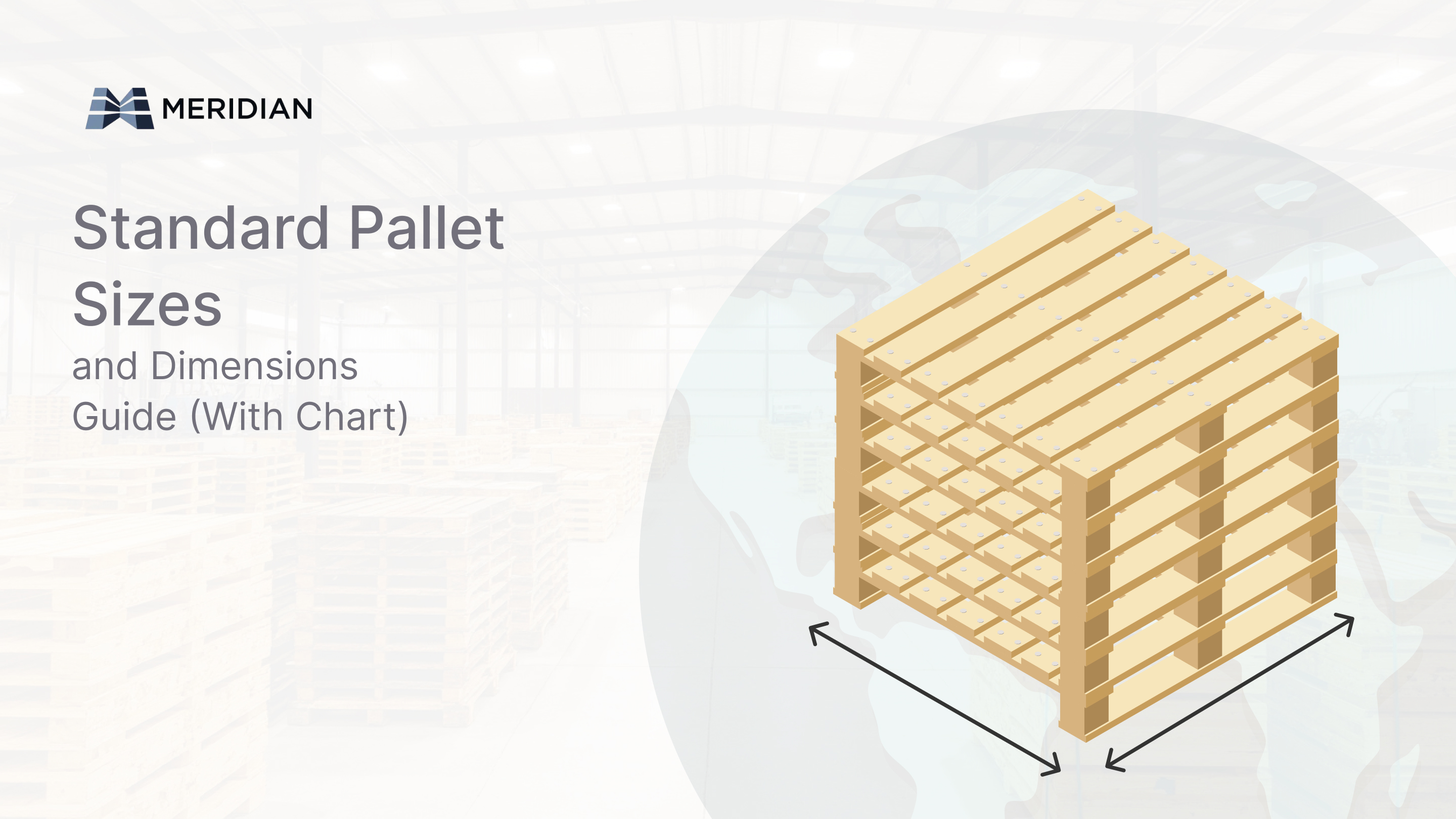
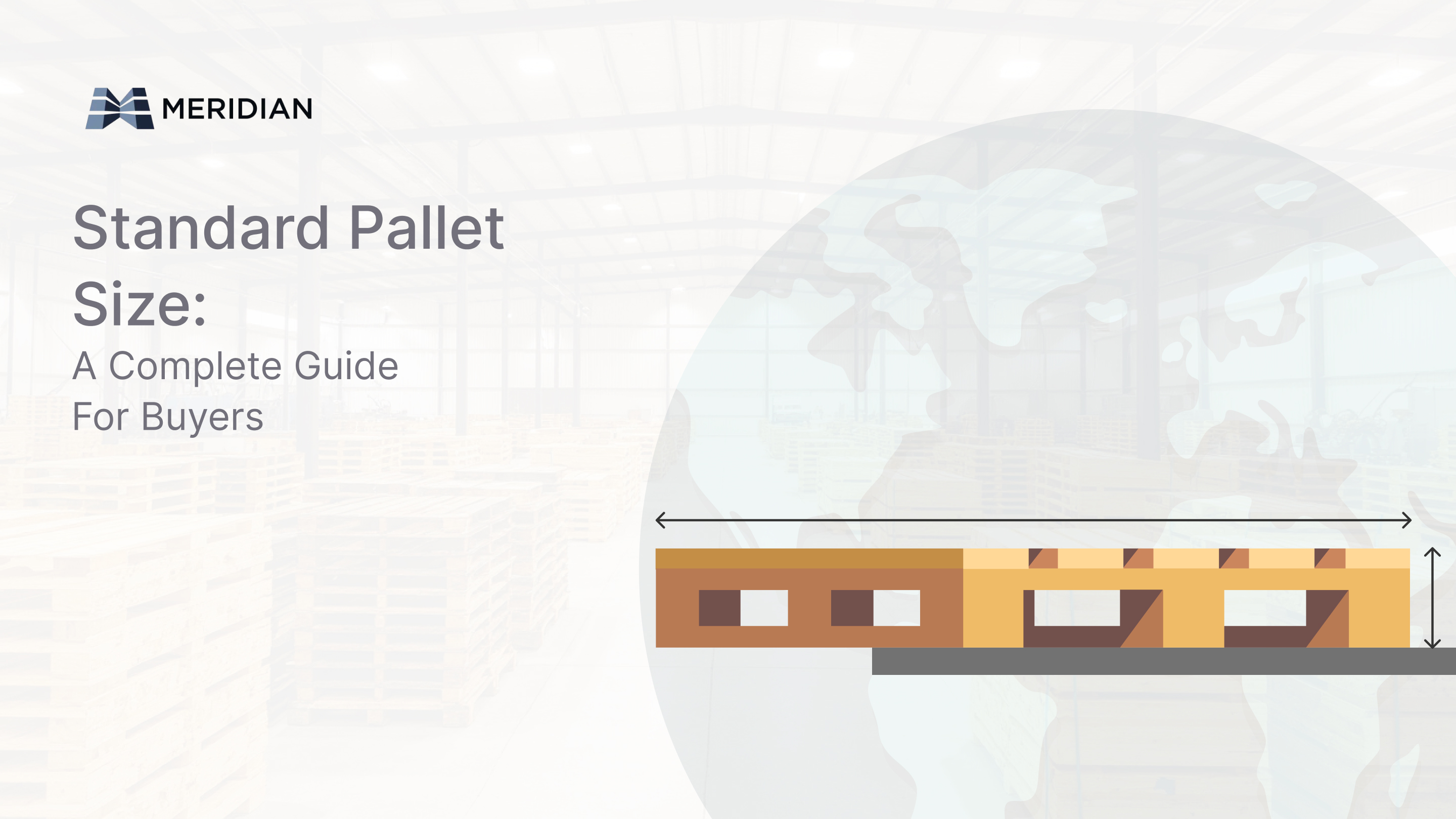
In this guide, we define the standard pallet size globally and regionally. You will gain a technical overview of common dimensions and learn how pallet type influences the measurement that matters to your operations.
Quick Look
The 48" x 40" GMA pallet is the undisputed US standard, fitting perfectly in standard 53-foot US semi-trailers.
Six primary ISO-recognized sizes exist to promote global commerce, minimizing cross-border compatibility issues.
Matching your pallet size to container dimensions (e.g., 48x40 to 48-foot truck width) maximizes cube utilization and reduces freight spend.
Many major US retailers mandate the 48" x 40" dimension for safe handling and integration with their distribution centers (DCs).
Stringer pallets and block pallets share the same dimensions, but block pallets are the global choice due to four-way entry.
The 1200mm x 800mm (47.24" x 31.5") is the primary standard for Europe, optimizing rail and container movement there.
The Global and Regional Standards For Pallet Sizes

The definition of a "standard" pallet changes based on where you are operating in the supply chain. While the world aims for standardization, different continents prioritize sizes that best fit their domestic transportation infrastructure.
Here are the key regional and international standards you must know:
The North American Standard
The US standard pallet is the most widely produced and utilized pallet size in the world. It is the core size mandated by the Grocery Manufacturers Association (GMA) and is designed to fit two abreast inside a standard 48-foot or 53-foot trailer.
Name | Dimensions (Inches) | Dimensions (mm) | ISO Standard | Key Use |
GMA Pallet | 48" x 40" | 1219 x 1016 | ISO 1 | US and Canadian Logistics |
The European Standard
Europe relies heavily on the EUR or Euro pallet, designed specifically to optimize freight movement on European rail and trucks. While the 1200mm x 800mm is the most common, a few other sizes are used for industrial goods.
Name | Dimensions (mm) | Dimensions (Inches) | ISO Standard | Key Use |
EUR Pallet (EUR1) | 1200 x 800 | 47.24" x 31.5" | ISO 2 | European Rail and Road |
Industrial Pallet (EUR2) | 1200 x 1000 | 47.24" x 39.37" | ISO 3 | General European Use |
The Asian and Australian Common Sizes
Asian and Australian standards reflect a mix of local needs and adaptation to shipping containers. Japan’s standard is optimized for its transportation network, while the 42" x 42" size is common in some parts of Asia for shipping break bulk.
Name | Dimensions (Inches) | Dimensions (mm) | ISO Standard | Key Use |
Japanese Pallet | 43.30" x 43.30" | 1100 x 1100 | ISO 5 | Japan, Korea |
Australian Standard | 45.9" x 45.9" | 1165 x 1165 | N/A | Australia |
Industry-Specific and Retail-Compliance Pallets
Some sizes are driven less by global trade and more by industry-specific or retail mandates, especially for carrying drums or large reels of material. These are the specialized sizes you encounter in specific logistics streams.
Name | Dimensions (Inches) | Dimensions (mm) | ISO Standard | Key Use |
Drum Pallet | 48" x 48" | 1219 x 1219 | ISO 4 | Chemicals, Drums, Reels |
Beverage Pallet | 42" x 42" | 1067 x 1067 | ISO 6 | Telecom, Paint, Beverages |
Understanding multiple regional standards is complex. Contact us to develop a unified global pallet strategy for your supply chain.
The sheer dominance of the 48" x 40" size in North America is not arbitrary; it is a result of specific industry planning.
The History of 48 x 40 Pallet Size
The 48" x 40" size of pallet is the most critical to understand for US operations. It became the default for the US system through a functional necessity: maximizing trailer space and facilitating efficient grocery distribution.
Here is the historical context:
Railroad Boxcars: The earliest material handling platforms were designed to fit securely inside the narrow doors of 1940s-era railroad boxcars.
Post-War Standardization: After World War II, the new Grocery Manufacturers Association (GMA) recognized the need to standardize. They needed a pallet that could be handled universally across all distribution centers.
The Container Fit: The 48" x 40" dimension was selected because it maximizes cube space utilization in both 40-foot shipping containers and 53-foot semi-trailers. Two 40-inch sides perfectly fit across the 96-inch width of a trailer.
Industry Adoption: The GMA's adoption ensured this size became the default for all US food, beverage, and consumer packaged goods (CPG) distribution networks.
While the dimensions may be the same, the actual pallet construction dictates how that size is measured and used in your facility.
Standard Pallet Sizes Based on Different Pallet Types
The structure of the pallet dictates the load capacity and handling properties, but the size description remains consistent across similar dimensions. You must know how the construction method impacts handling for your warehouse staff.
Here are the standard dimensions by common construction type:
Stringer Pallet
This is the US standard pallet with two-way (or partial four-way) forklift entry. The typical size is the 48" x 40" GMA standard US pallet dimension. Stringer pallets are cost-effective but can slow down operations where side entry is required for tight aisle maneuvers.
Block Pallet
Block pallets are the global standard due to true four-way entry. The most common block pallet size in the US is the 48" x 40", ensuring compatibility with the GMA network. In Europe, the 1200mm x 800mm is the primary block pallet size.
Skid Pallet
A skid is essentially a pallet without a bottom deck, making it an entirely different structural unit. Skid size generally follows the same sizing patterns as pallets, most commonly 48" x 40" in the US, but they cannot be used on open-beam racking systems without additional support.
While the 48" x 40" is dominant, your specific supply chain may require variations that optimize for retail or specialized freight.
Other Common Pallet Sizes and Dimensions
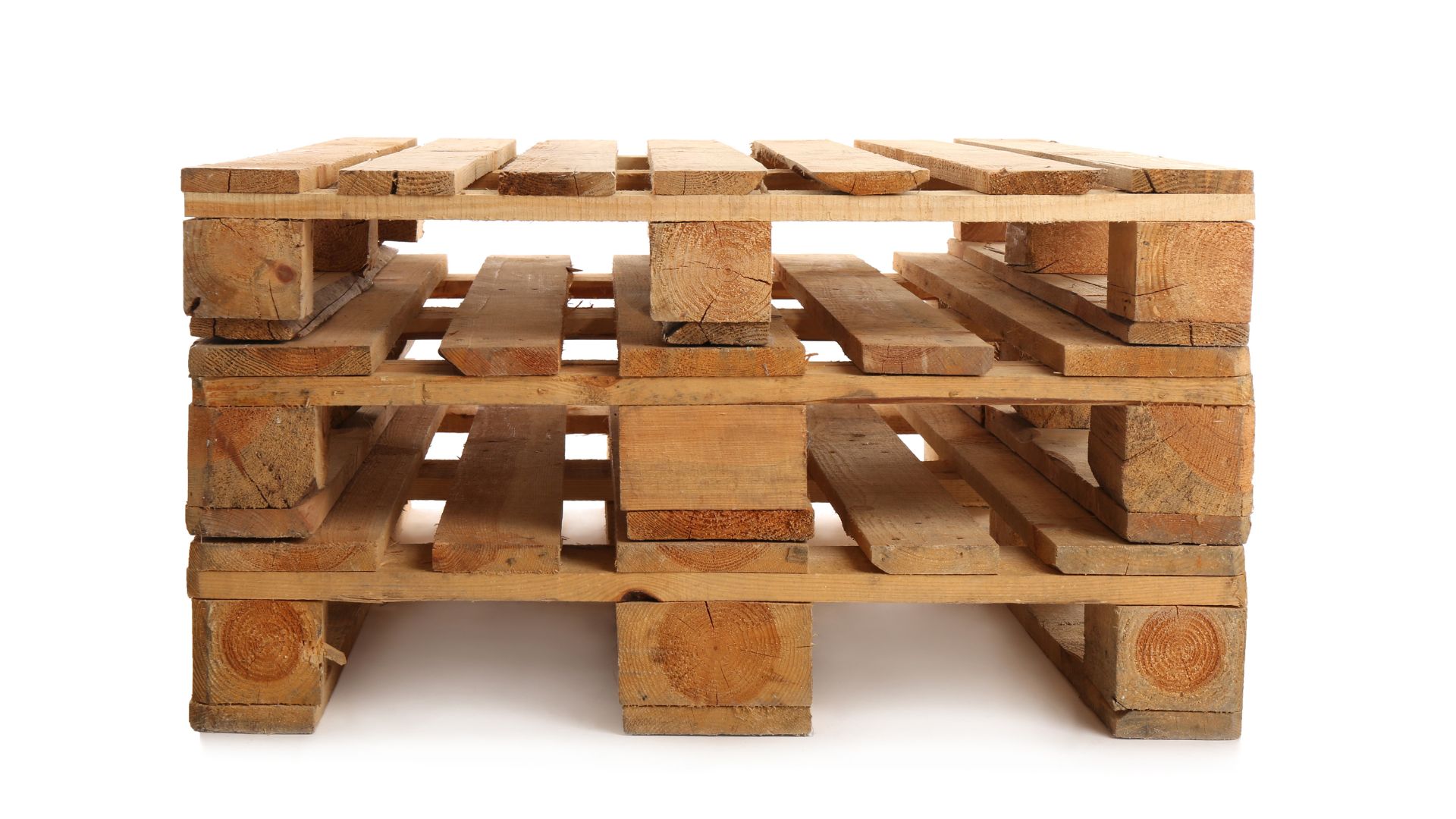
Beyond the major ISO sizes, specific logistical challenges have driven the adoption of smaller or specialized pallet dimensions. These niche sizes address specific challenges like retail floor display or high-density shipping.
Here are important alternatives:
The Retail-Compliance Pallet (48" x 40" GMA)
This dimension is specifically used because it is mandated by large US retailers. It ensures the pallet fits their internal conveyor belts, standardized forklifts, and optimized racking systems. Using this size avoids retailer compliance fees and slow receiving times.
The Half-Pallet or Split-Case Pallet (48" x 20")
This size is primarily used for small product volumes and retail display. The half-pallet is often used for store replenishment where a full pallet load is unnecessary, saving floor space and reducing the need for extensive backroom storage.
The Euro Pallet Alternative (47.24" x 39.37" / 1200mm x 1000mm)
This dimension, ISO Pallet 3, is widely used for industrial applications in Europe and is often used in US operations trading with European partners. This size allows for high-density shipping into ISO containers and efficient handling in European warehouses.
Dealing with multiple required sizes across different facilities is a challenge that requires a centralized partner.
Why Choose Meridian for Your Pallet Standardization
Procurement managers at companies with multiple distribution centers often face inconsistency in pallet size sourcing. One supplier delivers 48" x 40" pallets that are slightly off-spec, causing jams in automated systems, while another charges a premium for a non-standard size. This fragmentation prevents true supply chain standardization.
Meridian eliminates this size and spec risk by managing your entire network supply. We use our 2,400+ supplier network to guarantee dimensional consistency, ensuring every standard pallet size you receive meets your precise compliance requirements, regardless of location.
Guaranteed Sizing: We ensure all pallets, including GMA 48x40 and custom sizes, meet strict dimensional tolerances.
Supplier Vetting: Our network is audited to prevent the use of off-spec or non-compliant pallets that cause automation failure.
Global Sourcing: We can consistently source Euro-compliant or Asian standard sizes for your import/export needs through our verified partners.
Spend Control: Centralized buying power reduces the per-unit cost across all your required sizes and specifications.
Meridian provides the quality control and network scale needed to simplify and stabilize your complex pallet procurement.
Final Thoughts
Understanding the standard pallet size is a fundamental requirement for efficient logistics. Matching your pallet dimensions to your handling systems, trucks, and customer requirements is essential for reducing hidden costs associated with damaged goods and wasted freight space.
Meridian provides the expertise to audit your current usage and the network to supply any size, from the dominant 48" x 40" to specialized international sizes, with guaranteed compliance and consistency.
FAQs
Q. Why is 48 inches the most common pallet length in the US?
The 48-inch length is common because it fits perfectly along the 48-foot or 53-foot length of a standard US semi-trailer. This dimension maximizes the linear floor space available for freight.
Q. What does GMA stand for in the context of pallet size?
GMA stands for Grocery Manufacturers Association. They established the 48" x 40" dimension as the universal standard for grocery product distribution, which was then adopted by most other US industries.
Q. Is the 48x40 the same as the Euro pallet?
No. The US 48" x 40" is different from the standard European pallet (EUR1), which measures 1200mm x 800mm (or 47.24" x 31.5"). They are designed for different regional truck and rail dimensions.
Q. What is the most common pallet size used globally?
The US 48" x 40" (ISO 1) is the most widely produced pallet worldwide. However, the EUR 1200mm x 800mm is the most dominant size within Europe itself.
Q. What problems happen if my pallet size is slightly wrong?
Small deviations can cause significant problems in automated systems (like conveyors and sorters) where tolerances are tight. Incorrect sizing can lead to jams, equipment damage, and complete line shutdowns.