
Dealing with supply fragmentation across multiple distribution centers creates supply chain risk. Unpredictable delivery times and inconsistent pallet quality severely impact production continuity and budget control. Relying on local spot buying makes it difficult to manage your total indirect spend.
A strategic approach requires standardizing your specifications and securing a reliable, high-quality supply at scale. GMA pallets are the standard unit of trade for many industries. Understanding their specifics is the first step toward effective procurement governance.
In this comprehensive guide, we define the specifications, grades, materials, and applications of GMA pallets. You will learn when to choose the GMA pallet and understand the factors that affect its total cost of ownership.
An Overview
The GMA pallet's standardized 48x40 dimensions fit nearly all US and Canadian transport and material handling systems.
AAA, A, and B grades dictate repair history and appearance, directly impacting cost and suitability for automated lines.
The lowest unit price often leads to higher operational costs from line jams, damage, and manual procurement time.
You must calculate static, dynamic, and racking loads before selecting a pallet grade.
For export, the Heat Treatment (HT) stamp is mandatory to meet ISPM-15 international regulations.
Consolidating multi-site GMA pallet procurement provides significant buying leverage and control.
What is a GMA Pallet?
A GMA pallet is the official standard wood pallet size used by grocery and retail manufacturers in North America. This specification ensures seamless compatibility for handling, storage, and exchange across the entire supply chain. Its design is based on the requirements of the Grocery Manufacturers Association (GMA).
The GMA design is a 4-way entry stringer pallet. This means a forklift can insert its forks from all four sides. It is the most common size used in distribution centers, manufacturing, and retail globally.
Standard Dimensions:
Component | Measurement (Inches) | Measurement (MM) |
Length x Width | 48 x 40 | 1219 x 1016 |
Top Boards | Typically, five to seven boards | Varies by grade and repair |
Bottom Boards | Typically, three to five boards | Varies by grade and repair |
Request a Quote for our AAA GMA Pallets here.
The modern 48x40 GMA pallet specification is not arbitrary but the result of decades of industrial development and standardization.
History of the GMA Pallet
The design evolved significantly following World War II to support industrial logistics. The development accelerated when grocery manufacturers standardized dimensions for efficient railcar and truck usage.
The history of the GMA pallet is best understood through its development phases:
Decade | Key Development | Logistical Impact |
1920s | First double-faced pallet invented for the forklift | Enabled vertical stacking, increasing warehouse capacity. |
1950s | Standardized for military and rail freight use | Established early common dimensions for transport. |
1970s | GMA officially adopts the 48"x40" footprint | Created the primary standard for the grocery and retail supply chain. |
1990s | Introduction of pallet pooling and exchange systems | Increased pallet reuse and reduced the need for one-way shipping. |
Because GMA pallets are exchanged and reused, their condition varies widely, making the grading system a crucial component of procurement governance.
GMA Pallet Grades Explained: AAA vs. A vs. B
GMA pallets are reused and repaired, leading to distinct quality tiers or grades. Procurement teams must understand these differences. The grade determines the pallet's residual structural integrity, appearance, and suitability for specific applications like automation.
Here’s a detailed comparison:
Grade Level | Key Characteristics | Recommended Application |
AAA (or Club Grade) | Like-new condition. Clean, bright wood. Zero repairs. | Retail floor displays, highly sensitive product lines, automated systems. |
Grade A (#1) | Minimal signs of use. No block repairs or visible damage. Single stringer plates are acceptable. | General warehousing, high-volume manufacturing, closed-loop systems. |
Grade B (#2) | Structurally sound but with more visible wear. May have 1-2 stringer repairs using companion stringers or plugs. | Low-cost storage, internal movements, or where appearance is not critical. |
Beyond the grade, the actual composition of the pallet fundamentally dictates its longevity, weight capacity, and resistance to environmental factors.
Commonly Used Materials for a GMA Pallet

While the GMA specification primarily refers to dimensions, the choice of material impacts durability, cost, and load rating. Here is an overview of the most common material types used:
Hardwood: Dense woods like oak are used for their high strength and durability. They are ideal for heavy loads and offer a long lifecycle, but they typically cost more upfront.
Softwood: Materials like pine are lighter and less expensive than hardwood options. Softwood is common for pallets that are used for lower-weight loads or one-way shipping.
Recycled Wood: These pallets are constructed using salvaged components from previously damaged pallets. They offer a lower-cost option and support sustainability goals for businesses.
Plywood: Used for pallet tops or decks where a completely smooth, continuous surface is required. This eliminates gaps and reduces the risk of product piercing or damage.
Composite or Engineered Wood: Made from compressed wood fibers and resin binders. These materials are often used for block pallets and are usually ISPM-15 exempt.
Plastic: While not wood, plastic pallets are often built to the 48x40 GMA standard. They are durable, cleanable, and resistant to moisture.
Metal: Used for extremely heavy, fire-sensitive, or long-term outdoor storage applications. Metal pallets are significantly more expensive than wood.
Regardless of material, any wood pallet used for international shipment or sensitive goods requires documented treatment to ensure compliance and product safety.
Treatment Options for a GMA Pallet
Choosing the correct treatment is vital for regulatory compliance, especially for international trade, and for product safety. Procurement teams must clearly specify treatment needs on every purchase order.
This ensures the wood is prepared to prevent biological contamination and meet international standards. Here are the critical treatment options you must consider:
Heat Treatment (HT)
This is the universally accepted method for meeting ISPM-15 international regulations. The wood is placed in a kiln until its core reaches 56°C (133°F) for at least 30 minutes. The resulting HT stamp on the pallet signifies compliance for international export shipments.
Check out our heat-treated pallets here.
Chemical Fumigation (MB)
Historically, this involved treating wood with Methyl Bromide (MB) to eliminate pests. Due to environmental concerns and safety risks, this method is largely phased out in developed nations. Heat treatment is now the preferred and safer alternative for ISPM-15 compliance.
Kiln Drying (KD)
Kiln drying reduces the moisture content of the wood pallet to specific levels, often below 19%. This process helps prevent mold and fungus growth, increases the stability of the wood, and reduces the overall shipping weight.
Pressure Treatment
This involves forcing chemical preservatives deep into the wood structure under high pressure. Pressure treatment is typically used to protect the pallet from severe weather exposure and decay, especially for outdoor storage use.
Pallet Coatings or Sealants
A coating or sealant can be applied to the wood surface to prevent moisture absorption and reduce fiber shedding. This is often used in food processing or clean manufacturing environments to maintain higher hygiene standards.
Need Certified ISPM-15 or Food-Grade Pallets? Contact our experts to ensure your custom pallet orders meet all necessary regulatory and hygiene standards.
Once compliance is met, the most critical physical specification is the pallet's maximum capacity under various operational circumstances.
Weight Capacity and Performance
The terms static, dynamic, and racking load define the structural performance limits of any pallet. Confusing these terms or exceeding the load capacity will result in pallet failure, product damage, and operational downtime.
Pallet performance is not a fixed number but varies based on how the load is placed and stored. Here is a breakdown of the three critical load ratings you need to know:
Static Load Capacity
This is the maximum weight a pallet can support while resting stationary on a flat surface. When stacking loaded pallets in a warehouse, the static load is the total weight of all units resting on the bottom pallet. This value is always the highest of the three load types.
Dynamic Load Capacity
This represents the maximum weight a pallet can safely hold while it is in motion. This includes transport by a forklift, pallet jack, or conveyance system. This value is significantly lower than the static load because the movement creates uneven stress and shock forces.
Racking Load Capacity
This is the maximum weight a loaded pallet can support when it is placed in an open beam rack system. In this scenario, the pallet is only supported on its two ends, and the load must span the open space. This rating is the most restrictive and requires careful pallet specification.
Understanding the specific conditions under which GMA pallets provide the greatest return is essential for smart procurement.
When to Choose GMA Pallets: A Checklist
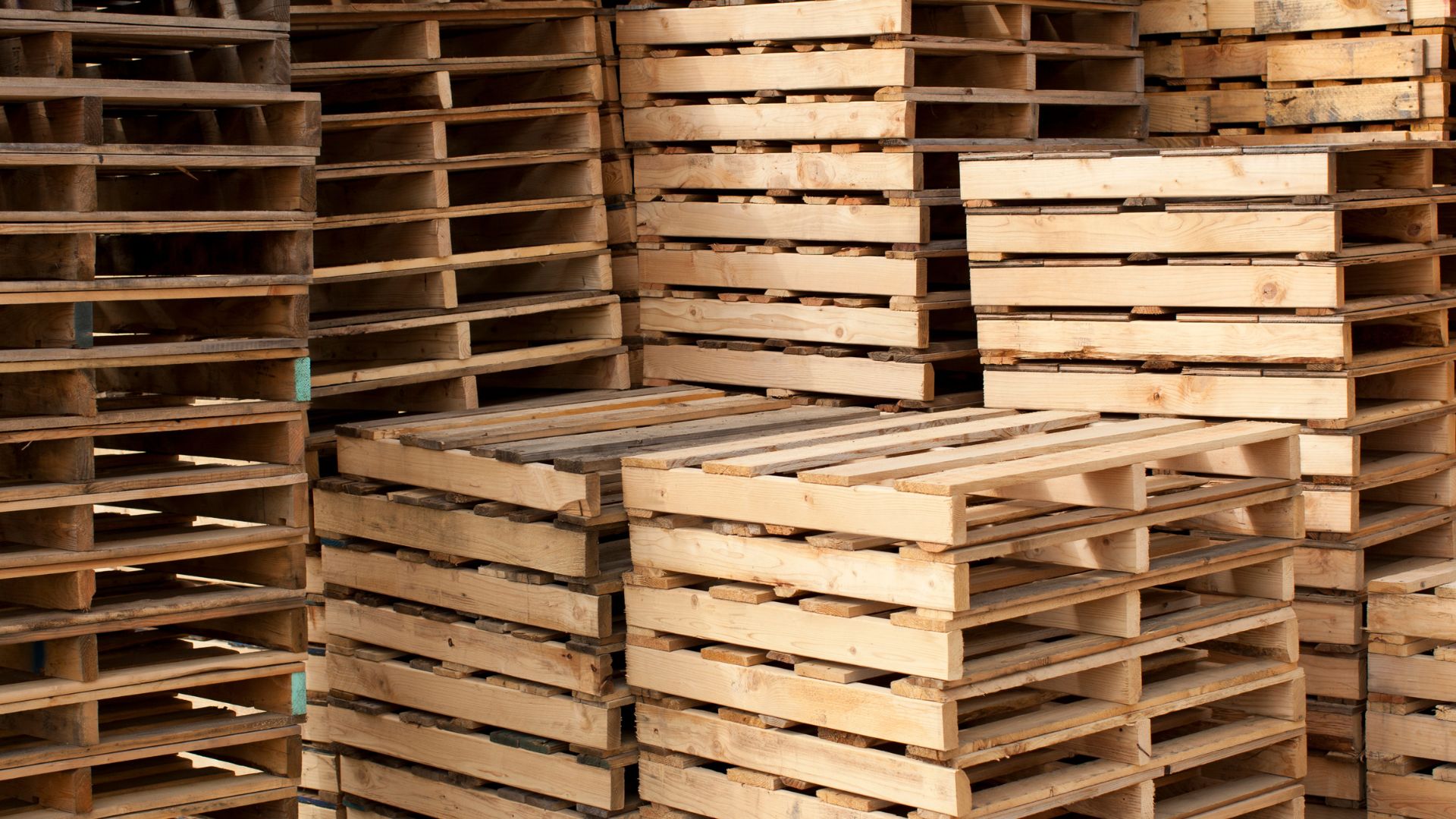
GMA pallets are the backbone of many American supply chains, but they are not the only solution. The 48x40 standard is ideal when your operations require high compatibility and seamless exchangeability within the common distribution landscape.
Making the right choice hinges on load and destination. Here is a detailed look at the scenarios that best suit the GMA standard:
When Your Shipments Use Common Carrier Freight
If your products move via standard truckload (TL) or less-than-truckload (LTL) carriers, the GMA size is standard. Using this size maximizes space efficiency in trailers and reduces the risk of carrier surcharges or rejections.
When You Participate in Pallet Exchange Programs
Many retail and grocery distribution chains operate using a pallet exchange model. GMA standardization is necessary for smooth transfer and trade of empty pallets between shippers and receivers at the dock.
When Operating Automated Material Handling Systems
Automated conveyor systems and ASRS (Automated Storage and Retrieval Systems) require extremely precise and consistent pallet dimensions. High-grade GMA pallets offer the necessary uniformity to prevent costly system jams and delays.
When Storage is Highly Standardized
GMA dimensions are specifically designed to align perfectly with standard warehouse racking and drive-in storage systems. This fit maximizes cubic storage space and ensures structural stability across the racking footprint.
Even when you know the ideal pallet, securing a reliable and cost-effective supply remains a challenge.
How Meridian Supports GMA Pallet Procurement
Fragmented procurement efforts lead to erratic pricing, inconsistent quality, and frequent stockouts across multi-site operations. Procurement directors struggle to gain comprehensive visibility into their total pallet spend. This inefficiency drives up the Total Cost of Ownership (TCO) unnecessarily.
Meridian addresses these complex supply chain challenges by acting as a strategic sourcing partner. We combine our nationwide network with digital tools to streamline procurement, ensure supply reliability, and enforce quality control for all your GMA pallet needs.
Meridian helps you manage and reduce your pallet spend by providing:
Aggregated Buying Power: Access better unit pricing by combining your multi-site demand across our vast supplier network.
Automated RFQ Platform: Instantly distribute quote requests and compare supplier responses in a single, auditable digital interface.
Supply Assurance: Tap into a network of over 2,400 vetted suppliers, guaranteeing consistent supply availability in virtually any US market.
Spend Visibility Dashboards: Gain real-time insight into spending patterns and supplier performance to identify waste and opportunities for savings.
Packaging Optimization Audits: Expert analysis of your current pallet grade and spec to propose alternatives that reduce freight costs and material damage.
Uniform Quality Control: We enforce consistent quality standards across all suppliers, reducing batch-to-batch variation and operational issues.
Meridian is your single point of control for high-quality, reliable GMA pallet supply across your entire enterprise.
Conclusion
Understanding the specifications, grades, and applications of GMA pallets is fundamental to effective supply chain management. By moving beyond the initial purchase price, focusing on TCO, and enforcing strict quality and compliance standards, you can turn pallet procurement into a source of operational stability.
Meridian gives you the technology and network necessary to execute this strategic shift. We ensure you receive high-quality, compliant pallets on time, every time, while providing the spend visibility your procurement team needs.
Contact our team to discuss how to standardize your supply and begin reducing your overall pallet spend. Request a quote for our AAA GMA Pallets here.
FAQs
Q. What is the typical lifespan of a wood GMA pallet?
The average wood GMA pallet lasts about 3 to 5 years, enduring roughly 5 to 7 cycles in the supply chain before needing repair or being retired.
Q. What is the maximum weight a GMA pallet can hold?
This depends entirely on the load type. A standard wood GMA pallet often holds a static load of up to 4,600 lbs, but the dynamic load (in motion) is usually limited to about 2,500 lbs.
Q. What is the primary advantage of a 4-way entry pallet?
The main advantage is flexibility in material handling. Forklifts can approach the pallet from any of the four sides, which improves efficiency and maneuverability in tight warehouse spaces.
Q. Does a Grade B pallet affect automated systems?
Yes, Grade B pallets, due to their repairs (companion stringers or plugs), are less dimensionally consistent. They can increase the risk of jams and downtime on high-speed automated conveyor lines.
Q. What is the difference between block and stringer pallets?
GMA pallets are stringer pallets, relying on three lengthwise runners. Block pallets use nine vertical posts or blocks instead of stringers, offering greater overall strength and better 4-way entry stability.
Q. Is it more cost-effective to repair or replace GMA pallets?
For high-volume closed-loop operations, repair is often more cost-effective than constant replacement. A quality pallet repair program extends the lifespan and reduces procurement frequency.