Relying on inconsistent or low-grade stringer pallet supply fragments your indirect spend control. Varying pallet quality leads to operational failures, including conveyor jams, higher product damage rates, and safety risks in high-throughput environments. These issues undermine your total cost of ownership (TCO).
Procurement teams must standardize specifications across all facilities to ensure supply reliability and consistent quality. Standardization prevents costly manual fixes and maintains the flow of high-speed material handling systems.
In this guide, we provide a technical breakdown of the stringer pallet. You will review its construction, understand the critical GMA standards, and learn how to audit quality using defined grading metrics.
Key Takeaways
The stringer pallet is the backbone of the North American 48" x 40" GMA standard.
While primarily designed for two-way entry, partial cutouts allow for limited four-way access for forklifts.
They generally offer a lower initial unit price than durable block pallets, making them common for single-use distribution.
Pallet grades (AAA, A, B) directly determine the pallet's residual structural integrity and suitability for automation.
Heat treatment (HT) certification is mandatory for export and should be confirmed via the ISPM 15 stamp.
Relying on low-grade stringer pallets increases the likelihood of product damage and receiving rejection fees at distribution centers.
What is a Stringer Pallet
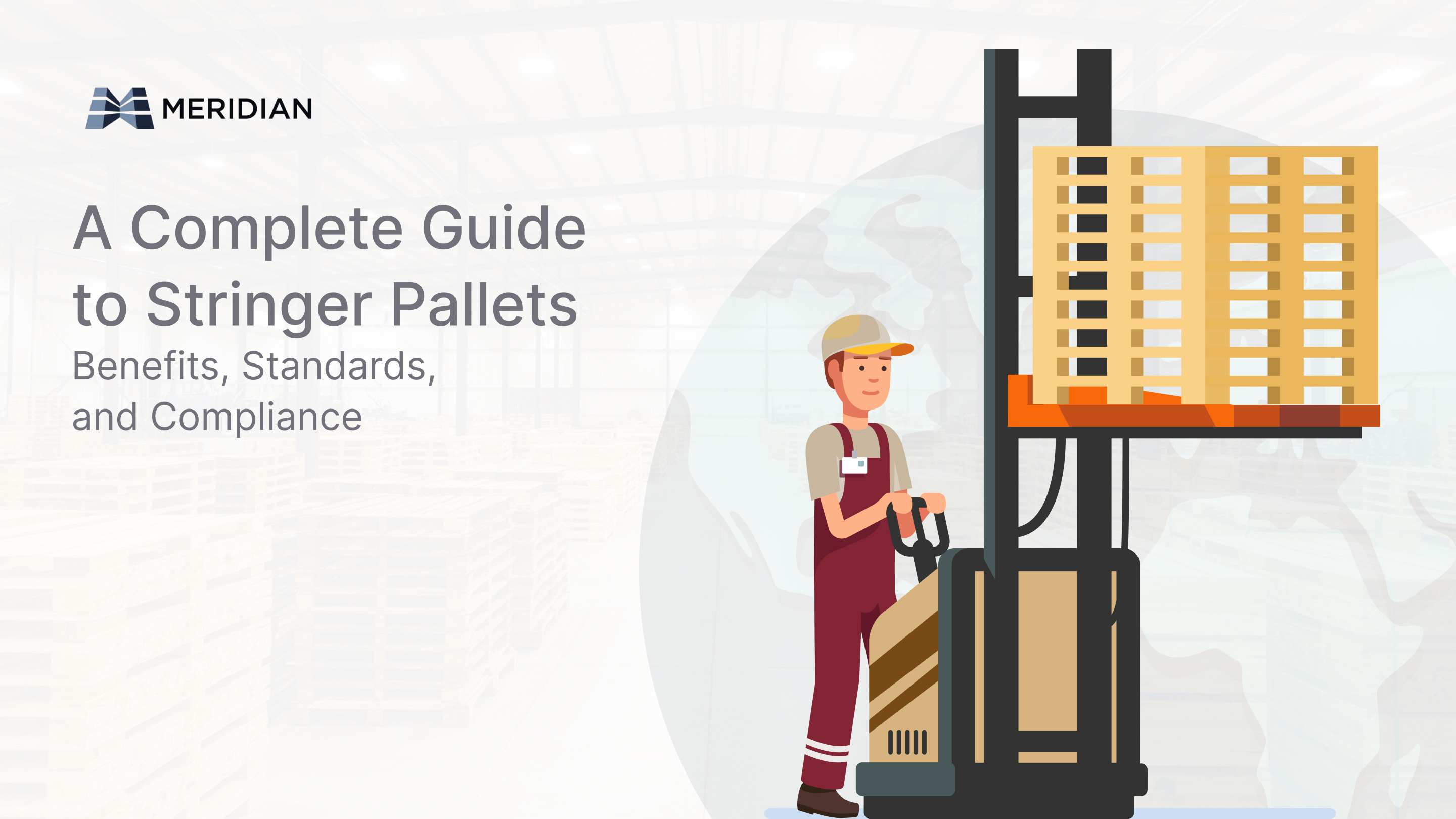
A stringer pallet is a material handling unit where the top and bottom deck boards are fastened to parallel lumber runners called stringers or pallet stringers. These pallet stringers run the full length of the pallet, supporting the load.
This construction typically limits forklift entry to the two open ends, though most modern stringer pallets include side notching for limited four-way access. This design balances lower manufacturing cost with adequate strength for standard logistics.
The popularity of stringer pallets in North America is driven by several key factors relevant to high-volume distribution.
4 Key Benefits of a Stringer Pallet
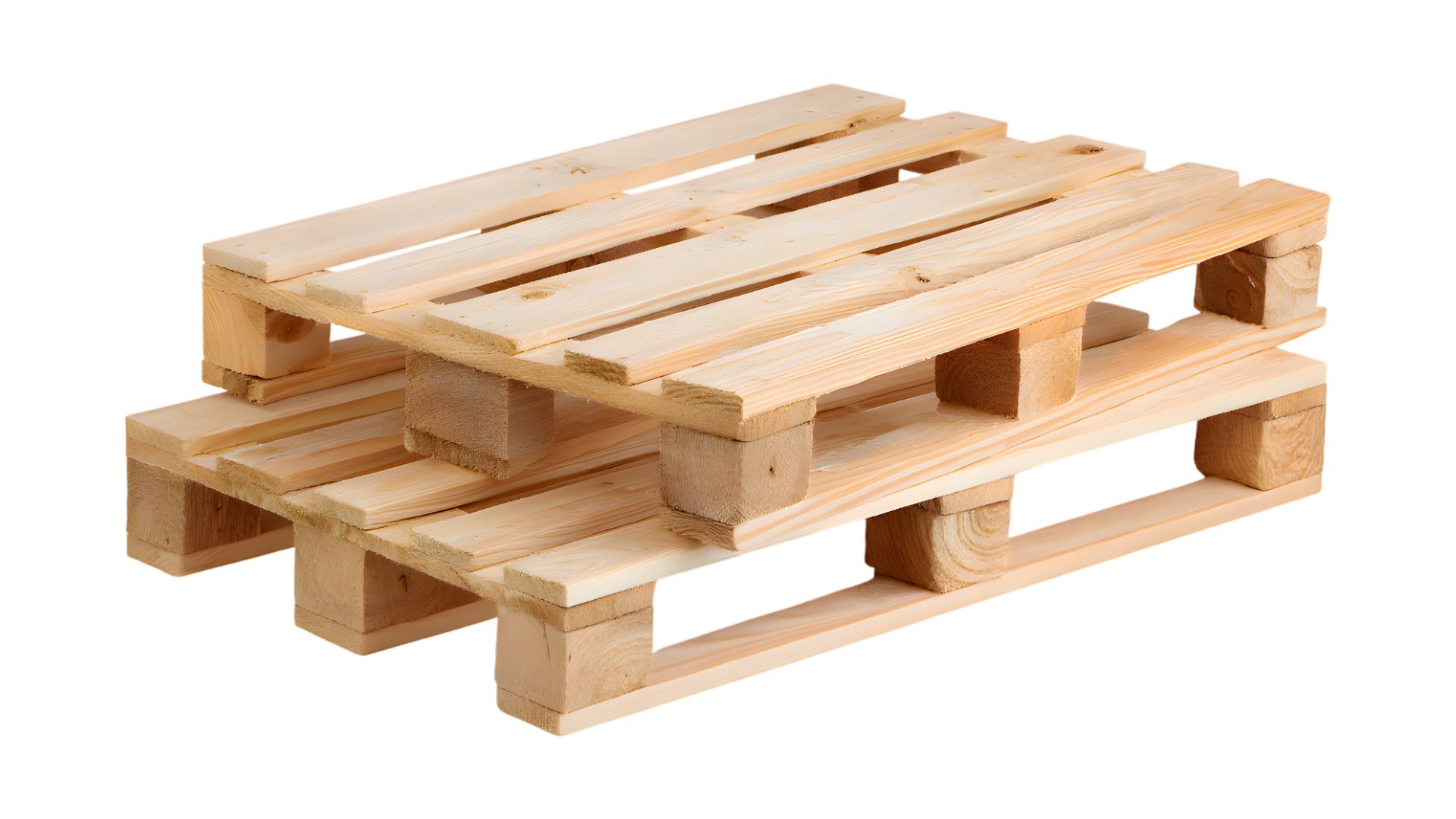
Procurement teams prioritize the stringer design for high-volume, domestic, or one-way shipment loops. They provide a structural balance of strength and lower cost, making them ideal when supply speed is critical, and the pallet is not expected to complete many return trips.
Here are the functional advantages of choosing a stringer pallet:
Lower Initial Cost and Simpler Construction
Stringer pallets require less lumber and simpler assembly than block pallets, reducing the per-unit purchase price. This low initial cost benefits companies moving products through one-way supply chains where recovery or recycling is not efficient.
Optimized for Standard Two-Way Material Flow
The design is optimized for environments where forklifts and pallet jacks primarily approach from the long-side ends. This flow is standard in many US trucking and warehousing operations designed before the widespread adoption of automation.
Lightweight Advantage for Freight Cost Reduction
The lighter lumber structure of a stringer pallet contributes to a lower tare weight compared to a block pallet. This small weight reduction is significant for high-volume logistics managers seeking to reduce billable freight weight across hundreds of shipments.
High Availability and Simplified Sourcing
Due to their standardization, stringer pallets are widely available across the 2,400+ US pallet supplier network. This high availability simplifies sourcing and helps procurement teams secure large volumes quickly, even for rush orders.
Request a complimentary packaging and pallet spend analysis.
Understanding the three core components helps you audit quality and recognize damage points in your incoming supply.
Components of a Stringer Pallet
The structural integrity and load capacity of any stringer pallet depend entirely on its components and the quality of their connection.
Here are the critical components:
Stringers (Runners): These are the three parallel pieces of lumber (usually 2" x 4") that run the length of the pallet. They support the deck boards and bear the majority of the weight. Damage to a stringer compromises the entire pallet structure.
Top and Bottom Deckboards: These boards form the surfaces where the product rests and where the forks exit. Standard GMA specifications require a specific number and spacing for these deck boards to ensure load stability and proper conveyor fit.
Fasteners: Nails, Staples, and Glue: Pallet construction relies on specialized helical or ring-shank nails. The quality of these fasteners directly impacts the pallet’s lifespan and resistance to racking stress.
The size and construction method of stringer pallets are dictated by the rigorous specifications established by industry associations.
GMA Standards for Stringer Pallet
The GMA standard governs the majority of stringer pallet use within the US logistics network. Adherence to these specifications is vital for compatibility with automated systems and standardized material handling equipment across the nation.
Here are the core requirements of the GMA standard:
The 48" x 40" Footprint: The pallet must measure 48 inches long (parallel to the stringers) by 40 inches wide. This specific size ensures two pallets fit side-by-side in a US semi-trailer with minimal wasted space.
Standard Deckboard and Stringer Layout Specifications: The GMA standard mandates the number, size, and spacing of deck boards and stringers. This consistency ensures reliable handling by forklifts, pallet jacks, and automated conveyors.
For recycled stringer pallets, quality is classified by a simple but critical grading system.
Different Grades of a Stringer Pallet

Procurement decisions regarding recycled stringer pallets require a clear understanding of the grade. The grade defines the quality of repairs, the number of defects, and the remaining service life of the pallet.
The common industry grades are:
Grade AAA (Premium)
This grade is nearly new or looks new, with minimal or no visible repairs. These pallets are highly consistent in appearance and dimension. They are required for high-speed automated systems, long-haul closed loops, and sensitive product handling environments like Food & Beverage.
Grade A
This is a clean, sturdy pallet that has seen repair, usually with the addition of a single stringer reinforcement (plug). They are suitable for general warehousing, standard transport, and distribution centers. They are the most common grade for general, heavy-duty use.
Grade B
This grade includes multiple repairs and noticeable structural imperfections like minor deck board gaps or multiple stringer plugs. Grade B pallets are best suited for light or static loads, internal storage, or short, one-way local shipments where cost minimization is the primary goal.
Before accepting any shipment, procurement and quality teams must verify that the pallets meet specific quality and compliance checks.
Stinger Pallet Final Procurement Checklist for Buyers
Ensuring quality starts with rigorous inspection at the receiving dock. A thorough check confirms the pallets meet the specified grade and are safe for your operations.
Here are the final checkpoints for your procurement team:
Verify Dimensional Compliance and Grade Stamp
Confirm the pallet measures precisely 48" x 40" and carries the correct heat treatment (HT) and grade stamps.
Do: Measure the width and length with a tape measure on 10% of the delivery sample.
Don't: Accept pallets without a visible, legible grade stamp if you ordered Grade A or above for your facilities.
Inspect for Critical Construction Flaws
Check for defects that could cause failure during transit or while stored on racking.
Do: Look for split or broken stringers that affect more than 50% of the runner's depth.
Don't: Allow protruding fasteners (nail heads) that can tear product packaging or damage stretch wrap.
Confirm Treatment and Compliance Documentation
Ensure that specialized treatment requirements, such as heat treatment for export, are correctly documented and marked.
Do: Check for the IPPC stamp (HT logo) if the pallet is intended for international shipping.
Don't: Assume the supplier provided the correct documentation; compliance paperwork is required for international customs clearance.
Need help identifying inefficiencies in your pallet procurement?
For companies engaged in international trade, the treatment applied to the stringer pallet wood is non-negotiable. Get in touch with our experts now.
Compliance and Treatments for Stringer Pallets
Regulatory compliance is a critical factor for any company that ships products across international borders or into specific industries like Food & Beverage. Failure to comply leads to customs delays or costly product rejection.
Here are the vital compliance requirements for stringer pallets:
ISPM 15 and the IPPC Stamp
The International Standards for Phytosanitary Measures No. 15 (ISPM 15) governs wood packaging material treatment. It requires wood to be treated to prevent the spread of invasive pests. Non-compliant pallets are subject to removal and destruction by foreign customs agencies.
Heat Treatment (HT) vs. Methyl Bromide (MB)
ISPM 15 requires either Heat Treatment (HT) or Methyl Bromide (MB) fumigation. HT is the global standard, requiring the wood to be heated to 56°C (132.8°F) for at least 30 minutes. MB fumigation is now largely restricted due to environmental concerns.
Domestic Treatment and Quality Stamps (KD, GMA)
For domestic US shipments, you may encounter the Kiln-Dried (KD) stamp, indicating low moisture content, which reduces weight. The GMA stamp confirms the dimensions meet the industry standard. These stamps signal quality control that supports predictable logistics.
Managing the quality and compliance across numerous local suppliers is the core challenge of pallet procurement.
Meridian: Strategic Stringer Pallet Sourcing
Procurement teams sourcing stringer pallets manually deal with quality control nightmares. Different local suppliers often define "Grade A" differently, leading to inconsistent load capacity, structural failures in racking, and compliance risk for export goods. This fragmentation causes spend leakage and operational instability.
Meridian solves this inconsistency by applying a data-driven approach to every stringer pallet order. Our technology and audit services ensure you receive the correct grade, specification, and treatment every single time, regardless of the shipment's location.
Consistent Grading: We standardize pallet grades across our entire 2,400+ supplier network to eliminate quality ambiguity.
Audit Documentation: We provide documented evidence of ISPM 15 or heat treatment compliance for every export order.
RFQ Automation: Use our platform to instantly quote custom stringer sizes and receive real-time, compliant options.
Optimization Audit: Our experts recommend the exact grade needed for your specific handling system, preventing overspending on unnecessary durability.
Meridian gives you visibility and control, transforming fragmented supply into predictable, high-quality material flow.
Wrapping Up
The stringer pallet remains the most cost-effective solution for North American high-volume logistics. Mastering the standards, understanding the grading system, and ensuring full compliance are essential for effective procurement and operational safety.
Meridian provides the tools and network scale necessary to simplify the complexity of pallet sourcing and maintain a high-quality stringer pallet supply across all your facilities.
Request a complementary spend analysis.
FAQs
Q. Can a stringer pallet be used in high-speed conveyors?
Yes, but only if they are Grade AAA or Grade A. Grade B or badly repaired stringer pallets lack the dimensional consistency needed for tight tolerances in high-speed automated conveyor systems.
Q. What does the "plug" mean on a repaired stringer pallet?
A plug refers to a companion stringer, which is an additional piece of wood fastened next to a broken stringer. It reinforces the runner and restores structural integrity to the repaired area of the pallet.
Q. Are stringer pallets suitable for export shipping?
Yes. As long as the wood has undergone the required heat treatment (HT) and carries the proper ISPM 15 compliance stamp, a stringer pallet is fully acceptable for international export.
Q. Stringer vs block pallet: which one is better?
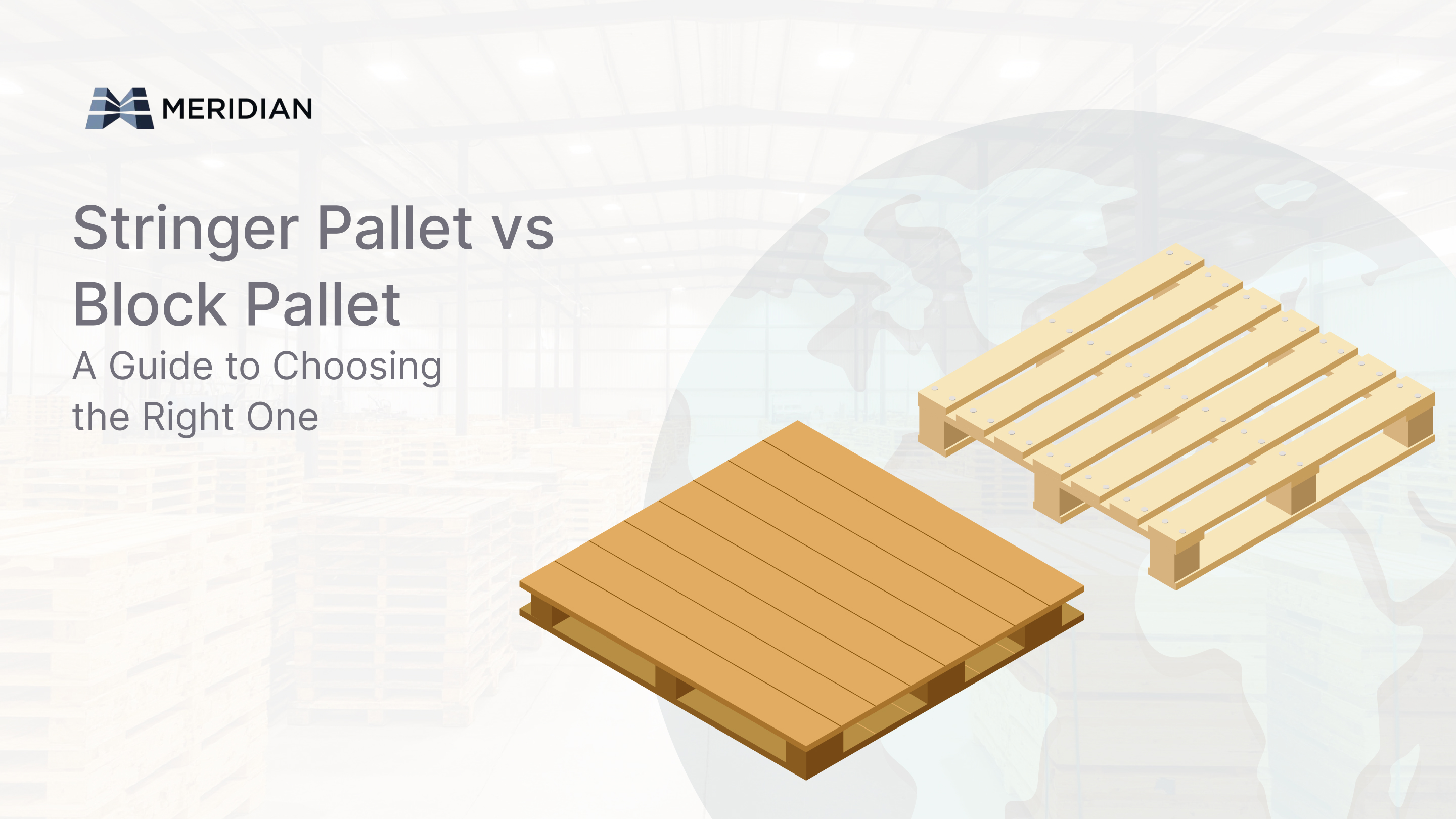
A stringer pallet uses three parallel runners and offers two-way or partial four-way entry. A block pallet uses nine wood blocks and offers true four-way entry, making it stronger and more suited for automated machinery.
Q. What is the typical lifespan of a stringer pallet?
A new or Grade AAA stringer pallet can last between 3 to 7 trips in a high-throughput environment. The lifespan significantly decreases depending on the handling intensity and the quality of the wood used in its construction.
Q. What is the significance of the 48-inch by 40-inch dimension?
The 48" x 40" dimension maximizes freight cube utilization within standard 53-foot US semi-trailers. This size allows two pallets to sit perfectly side-by-side, preventing shifting and minimizing wasted space, which reduces freight costs.