Shipping products overseas introduces far more risk than domestic freight. Ocean transit exposes cargo to extended handling cycles, high humidity, vessel movement, and long container dwell times. Even small oversights in pallet selection can lead to customs delays, fumigation penalties, or rejected shipments, resulting in significant financial and operational impact.
The right ocean freight pallets play a critical role in ensuring cargo integrity and regulatory compliance. Understanding how they differ from standard domestic pallets and what regulations and performance requirements they must meet is essential for any business shipping overseas.
This blog serves as an introductory guide to ocean freight pallets, what they are, how they work, key compliance requirements, common mistakes to avoid, and best practices for preparing pallets for international shipping.
In a Nutshell:
Ocean freight shipments require pallets that are more durable, moisture-resistant, and compliant with global regulatory requirements than domestic shipments.
ISPM-15 certification is essential for wood pallets used for international transport; non-compliance can lead to customs delays, fumigation, penalties, or shipment rejection.
Export pallet material choices include heat-treated wood, plastic, plywood, and composite; each offers advantages based on cargo needs, destination rules, and cost.
Poor pallet selection and preparation are major causes of ocean-freight damage claims, often avoidable through proper load stability, securement, and moisture control.
Best practices include: using compliant pallets, proper weight distribution, protective wrapping and strapping, documentation readiness, and moisture-mitigation steps.
Working with pallet or packaging specialists helps businesses ensure compliance, optimize pallet choice, and reduce the risk of freight damage and delays during international transit.
What Are Ocean Freight Pallets?
Ocean freight pallets are pallets specifically designed and prepared to support goods shipped by sea. Compared to domestic pallets, export-grade pallets must meet stricter requirements for structural strength, pest control, moisture resistance, and compliance with international regulations.
Ocean freight pallets serve three primary purposes:
Support and stabilize cargo throughout long-distance containerized transportation
Protect products from shifting loads, vibrations, and environmental exposure
Ensure compliance with international import and export regulations
Unlike standard domestic pallets that may be used for short truck or warehouse movements, pallets intended for ocean transport must perform consistently under heavier loads and for more extended periods, often in unpredictable conditions.
These pallets may be made from heat-treated wood, plywood, presswood, plastic, or composite materials. The choice depends on the destination rules, cargo type, budget, and whether pallets are expected to be returned or circulate internationally.
With a clear picture of what ocean freight pallets are designed to do, it becomes easier to see why choosing the right one is critical for cargo safety and compliance.
Why Pallet Selection Matters in Ocean Freight Shipping?
Most freight damage claims during international transport are tied to improper packaging, insufficient unit load stability, or pallet failure rather than transportation incidents. Because products shipped overseas endure:
Extended dwell time inside shipping containers and port terminals
Multiple hand-offs between carriers and equipment
Load shifting due to ocean motion and vessel roll
High humidity and moisture exposure can weaken wood and packaging
Temperature fluctuations from freezing to extreme heat
A poorly chosen pallet can compromise an entire container load. And in many cases, ocean freight packaging damage may not be covered by insurance if the shipper used unsuitable or non-compliant packaging materials.
To make informed choices, shippers must understand the specific performance criteria pallets must meet for international transport.
Key Requirements for Ocean Freight Pallets
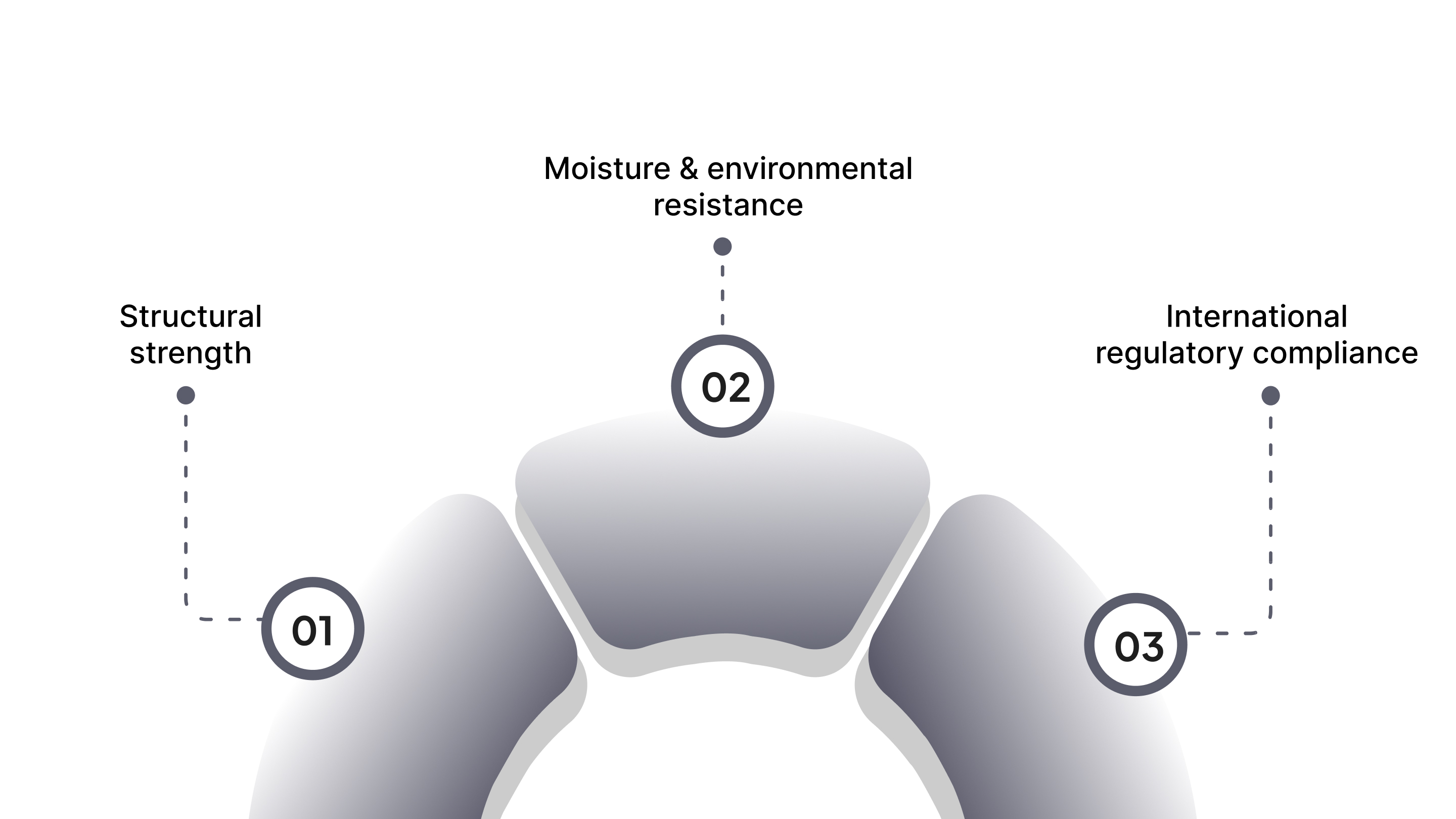
To be suitable for export, pallets must address three major performance categories, including:
1. Structural Strength
Ocean freight pallets must support heavy loads and remain stable when stacked several tiers high. Standard container stacking loads can exceed 10,000 pounds. The pallet must withstand both static and dynamic pressures.
2. Moisture and Environmental Resistance
Shipping containers are subject to high humidity and condensation. Pallets exposed to moisture can deteriorate or become moldy, potentially contaminating goods. For food, pharmaceuticals, or sensitive electronics, moisture may cause irreversible damage.
3. International Regulatory Compliance
Ocean freight pallets must comply with global phytosanitary regulations, particularly for wood-based pallets, most commonly ISPM-15.
Together, these requirements ensure pallets remain safe, compliant, and reliable throughout long-distance ocean transport.
With these foundational requirements in place, the next critical consideration is ensuring full ISPM-15 compliance for any wood pallets used in export shipments.
Understanding ISPM-15 Compliance
ISPM-15 (International Standard for Phytosanitary Measures No. 15) is a global regulation governing the treatment of solid wood packing materials used in international trade. It is designed to prevent the spread of wood-borne pests and diseases across borders.
Wood pallets used in ocean freight must be:
Heat-treated (HT) at 56°C for at least 30 minutes at the core
Or fumigated with methyl bromide (MB), where still allowed
Stamped with the official IPPC mark indicating compliance
The ISPM-15 stamp must be:
Permanent and clearly visible
Applied to two opposite pallet sides
Recorded if documentation is required
Shipments arriving without compliant pallets may be:
Quarantined or delayed at port
Fumigated at the shipper’s expense
Returned to the origin
Destroyed often without reimbursement
Subject to penalties from customs authorities
Non-compliance can disrupt entire supply chains and create costly ripple effects, including missed delivery windows and failure to meet customer or distribution requirements.
More than 180 countries enforce ISPM-15, including the U.S., Canada, European Union countries, China, Australia, and many others.
Once compliance obligations are understood, the next step is selecting a pallet material that meets your cargo needs and destination requirements.
Types of Pallets Commonly Used for Ocean Freight Shipping
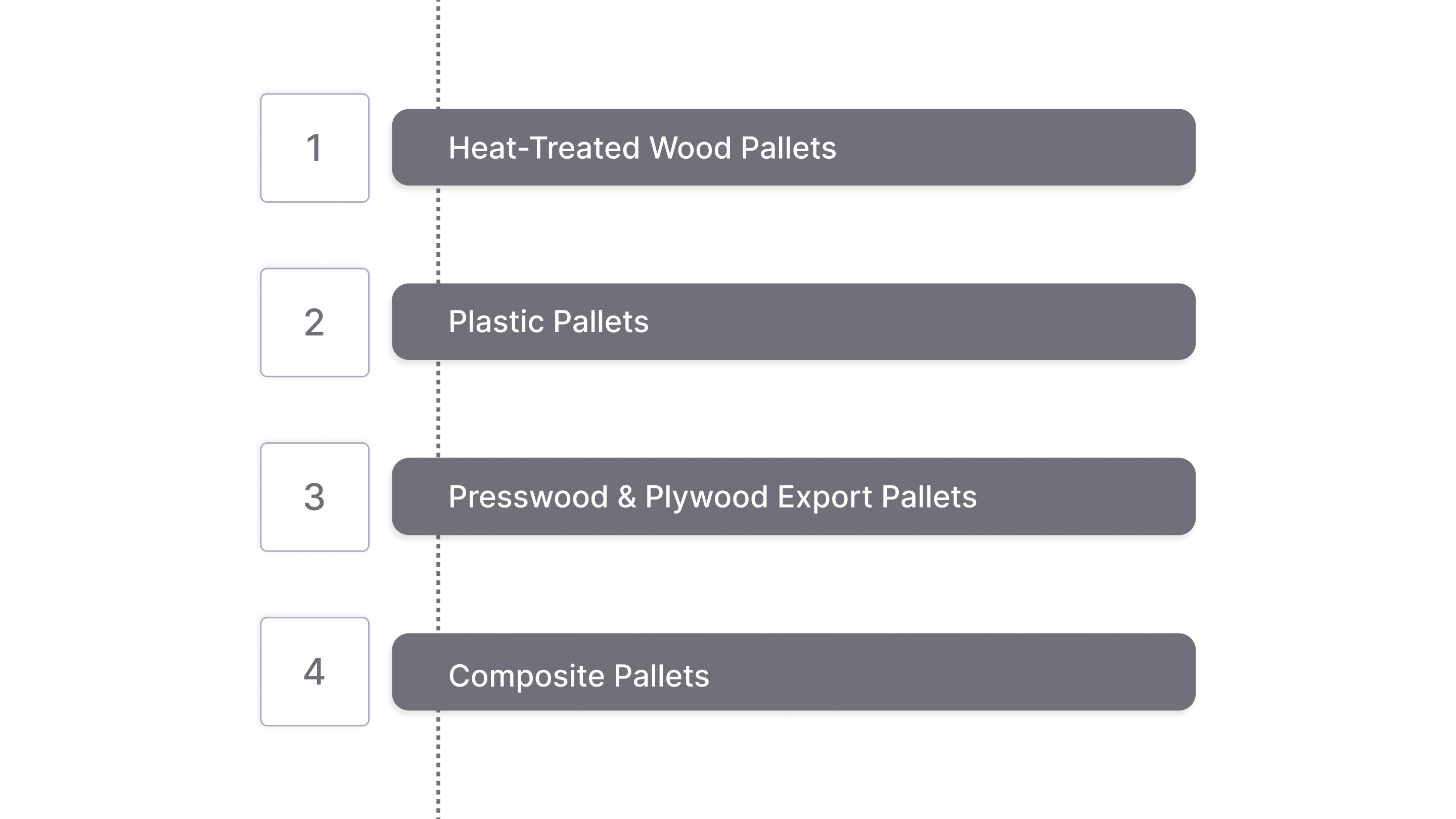
There is no universal “best pallet” for every application. The right choice depends on cargo type, industry standards, budget, destination regulations, and whether pallets will be reused or disposed of. Common types of pallets that are commonly used in freight shipping include:
1. Heat-Treated Wood Pallets
One of the most widely used export pallet types.
Advantages
ISPM-15 compliant when stamped and traceable
Strong and durable for heavy freight
Cost-effective for large-scale shipping
Available in standard and custom sizes
Considerations
Can absorb moisture in humid environments
Heavier than plastic or presswood
Requires inspection to maintain quality
2. Plastic Pallets
A popular choice for controlled and high-value product shipments.
Advantages
Excellent moisture and corrosion resistance
Lightweight and consistent dimensions
Hygienic for food, pharma, and cleanroom environments
Often reusable for return supply chains
Considerations
Higher upfront cost
More expensive to replace if not returned
Some destination countries restrict reuse or require recovery plans
3. Presswood & Plywood Export Pallets
Often exempt from full ISPM-15 requirements because of manufacturing processes.
Advantages
Lightweight and space-efficient
Typically accepted globally without heat treatment
Lower cost for one-way or disposable shipments
Considerations
Less load capacity than solid wood
Susceptible to moisture if unprotected
Not suitable for heavy industrial freight
4. Composite Pallets
Made of engineered wood, resin, or fiber material.
Advantages
Stronger than plywood
More moisture-resistant than solid wood
Uniform structure for load consistency
Considerations
Higher cost and limited availability
Heavier than plywood or plastic, depending on design
With these pallet types and their trade-offs in mind, we move on to understanding how to choose the most suitable option for your international shipment.
Choosing the Right Pallet for Your International Shipment
When evaluating pallets for ocean transport, consider:
Selection Factor | Why It Matters |
Cargo type and fragility | Determines required pallet strength and stability |
Weight distribution & stacking pattern | Prevents collapse in transit |
Destination regulations | Avoids customs rejection |
Transit duration & climate | Impacts moisture and corrosion resistance |
Return or one-way use | Influences the material cost selection |
Hygiene or contamination concerns | Especially for food/pharma/chemicals |
Storage and warehouse equipment | Pallet compatibility with forklifts & racking |
A well-matched pallet reduces total cost and improves damage prevention, even if it is not the cheapest option upfront.
Even with the proper selection criteria, many shippers still encounter preventable issues due to oversights in pallet preparation and usage.
Common Mistakes Companies Make With Ocean Freight Pallets
Even experienced logistics teams encounter issues when pallet selection is rushed or standardized without assessment.
Frequent errors include:
Choosing pallets based only on price rather than performance
Using untreated or uncertified wood pallets
Poor load configuration and weak cargo securement
Ignoring humidity and condensation risks
Incorrect pallet size relative to container footprint
Inadequate documentation for customs clearance
Upfront cost savings can quickly disappear when freight arrives damaged or is held at the port.
To avoid these costly errors, it’s essential to follow proven best practices that strengthen load stability and protect cargo throughout ocean transit.
Best Practices for Preparing Pallets for Ocean Freight
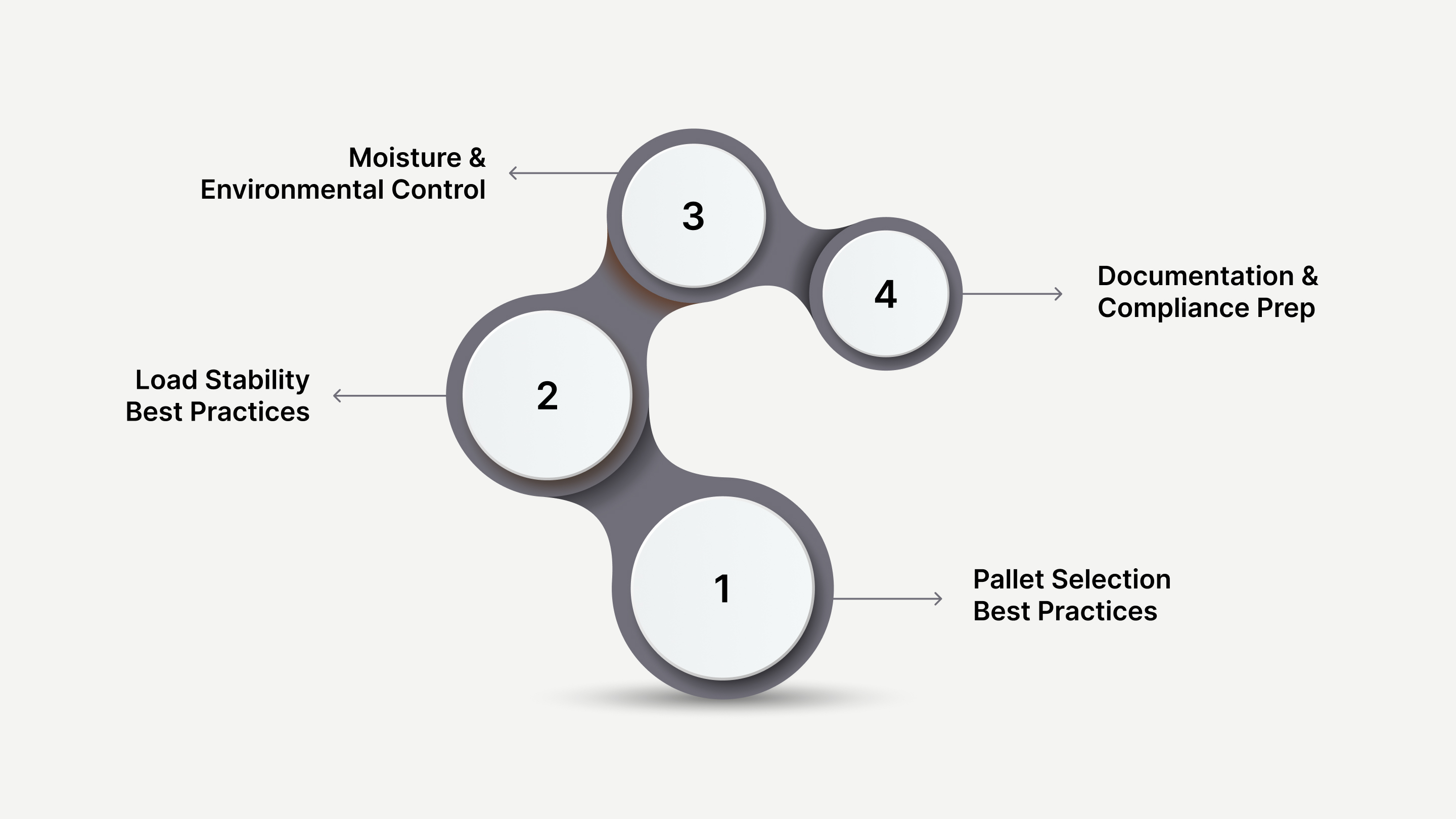
Even a compliant, export-grade pallet can fail if the load is not secured properly or if environmental risks are overlooked. Since ocean freight involves prolonged transit, container movement, and high humidity, following proven preparation practices helps prevent product damage, reduce claims, and ensure shipments arrive safely and on schedule.
Pallet Selection Best Practices
Use ISPM-15 stamped HT wood pallets or compliant alternatives
Verify treatment markings and certification documentation
Match pallet material to environmental exposure and cargo type
Load Stability Best Practices
Use corner protection, straps, bands, or stretch wrap
Ensure even weight distribution and stable stacking
Avoid overhang it increases damage likelihood
Use slip sheets or protective liners between layers
Moisture & Environmental Control
Add desiccants or moisture-barrier bags for sensitive cargo
Avoid storing pallets directly on the ground, pre-loading
Inspect pallets for mold or water staining before use
Documentation & Compliance Prep
Check specific country import rules in advance
Attach required declarations and certificates securely
Maintain inspection and treatment records for traceability
Strong upfront preparation pays off in faster clearance and lower damage rates.
While these guidelines offer a strong foundation, many businesses benefit from expert support to ensure compliance, optimize pallet performance, and prevent supply chain disruptions.
How Working With a Pallet or Packaging Partner Can Help?
International pallet requirements can be complex, especially when shipping to multiple countries, switching freight routes, or scaling volume. For many businesses, working with a pallet broker or packaging optimization partner helps reduce risk, ensure compliance, and identify cost efficiencies.
Experienced partners can:
Recommend the right pallet type based on cargo, region, and use case
Help verify ISPM-15 compliance and documentation
Provide access to export-grade pallet inventory without last-minute shortages
Analyze packaging configurations for damage reduction and freight efficiency
Support load design, pallet patterns, and material substitution decisions
Here’s why choosing Meridian can make a real difference, based on its publicly available performance data:
Meridian operates a network of 2,400+ trusted partners across the U.S. and has delivered over 1 million pallets to clients nationwide, giving clients access to an unusually large and resilient supply chain.
Their proprietary procurement technology reportedly reduces speed-to-procurement, helping avoid costly last-minute sourcing delays and keeping supply chains more predictable.
On average, national clients working with Meridian realize around 5-25% cost savings, while maintaining guaranteed supply reliability through multiple supplier backups.
Meridian provides pallet sourcing support along with packaging optimization audits that reveal cost-saving opportunities and strengthen load performance across domestic and international transportation. Their experience across diverse logistics environments removes guesswork and adds reliability where it matters most.
Wrapping Up
Ocean freight shipping presents unique challenges that demand careful pallet selection and load preparation. The right ocean freight pallets help protect products during long transit, prevent customs delays, and maintain supply chain stability.
Need help choosing the right pallets for your business? Visit Meridian to explore a wide range of pallet solutions, tailored to meet your specific needs.
FAQs
Do all countries enforce ISPM-15 regulations for wood pallets?
Most major trading nations require ISPM-15 compliance, but specific rules, inspection strictness, and documentation needs vary by destination. Checking country-specific policies before shipping helps prevent unexpected delays.
How early should companies plan pallet requirements before an ocean shipment?
Ideally, several weeks in advance to allow time for sourcing compliant pallets, arranging documentation, conducting load testing if necessary, and aligning packaging with container configuration.
Are returnable or reusable pallet systems practical for overseas shipments?
They can be particularly useful for closed-loop trade lanes or high-value shipments, but they require logistical planning for recovery, tracking, and potential reverse freight costs.
Can ocean freight pallets be optimized to reduce container freight costs?
Yes. Adjusting pallet dimensions, layout patterns, and stack height can help maximize container utilization, reducing cost per shipped unit even without changing cargo volume.
What types of products typically require premium pallet materials for ocean shipping?
Pharmaceuticals, food, temperature-sensitive, high-value electronics, industrial chemicals, and products with strict hygiene standards often benefit from plastic or composite pallets over wood.
What documents may be required for ocean freight pallets made from ISPM-15-treated wood?
Documentation may include treatment certificates, origin records, fumigation declarations (if applicable), and export packing lists showing pallet compliance details.