Pallets often seem like simple platforms, yet they become a major pressure point when storage feels cramped, shipments move more slowly than expected, and handling errors start costing you time and money. Teams working in tight warehouse spaces or managing inconsistent freight flow quickly realize how easily inefficiencies build up when pallet systems aren’t optimized. The Freight Transportation Services Index reached 137.0 in May 2025, sitting just 2.6% below the all-time high, which shows how demanding freight movement has become across the country. Understanding pallets and how they support logistics gives you a clearer path to reducing bottlenecks, improving handling, and scaling operations with fewer headaches.
Key Takeaways
Pallets create a stable unit load that speeds up forklift handling, protects products, and keeps inventory off the floor.
Material choices like wood, plastic, metal, composite, and recycled designs match different weight requirements, hygiene standards, and shipping conditions.
Pallets strengthen logistics by improving stacking efficiency, reducing damage during transit, supporting cross-docking, and fitting automated systems.
Common uses include storing goods on racking, moving materials through production lines, supporting cold-chain loads, preparing export freight, and consolidating e-commerce shipments.
What Is a Pallet?
A pallet is a flat, portable platform designed to support goods during storage, handling, and transportation. It acts as the foundation of a “unit load,” allowing materials to move efficiently through warehouses and shipping networks. Standardized dimensions help maintain compatibility with forklifts, pallet jacks, and automated equipment. The design keeps products stable, elevated, and protected through every stage of the supply chain.
Now, it becomes easier to understand how it handles weight, movement, and protection across busy operations.
How Pallets Function in Handling Goods?
Pallets function as the base structure that stabilizes and supports items so they can be lifted, moved, and stored without manual strain.
Here are the key ways pallets handle goods efficiently:
Enable mechanical movement: Pallets give forklifts and pallet jacks the access points needed to lift heavy loads safely, creating a smoother workflow and reducing physical strain on teams.
Support standardized stacking: Consistent pallet dimensions allow uniform stacking, helping you maintain vertical storage efficiency and minimize product tipping or shifting during transit.
Keep products elevated: Pallets raise goods off the floor, preventing moisture absorption, contamination, and unnecessary damage during storage or loading.
Distribute weight evenly: A well-constructed pallet spreads weight across its deck boards and stringers, protecting fragile items during moves across uneven floors or dock plates.
Reduce manual touchpoints: Palletized loads require fewer manual adjustments, which lowers error rates and limits the risk of worker injury.
Once the handling mechanics are clear, the next step is looking at the different pallet types available and how their materials shape performance.
6 Types of Pallets and Their Materials
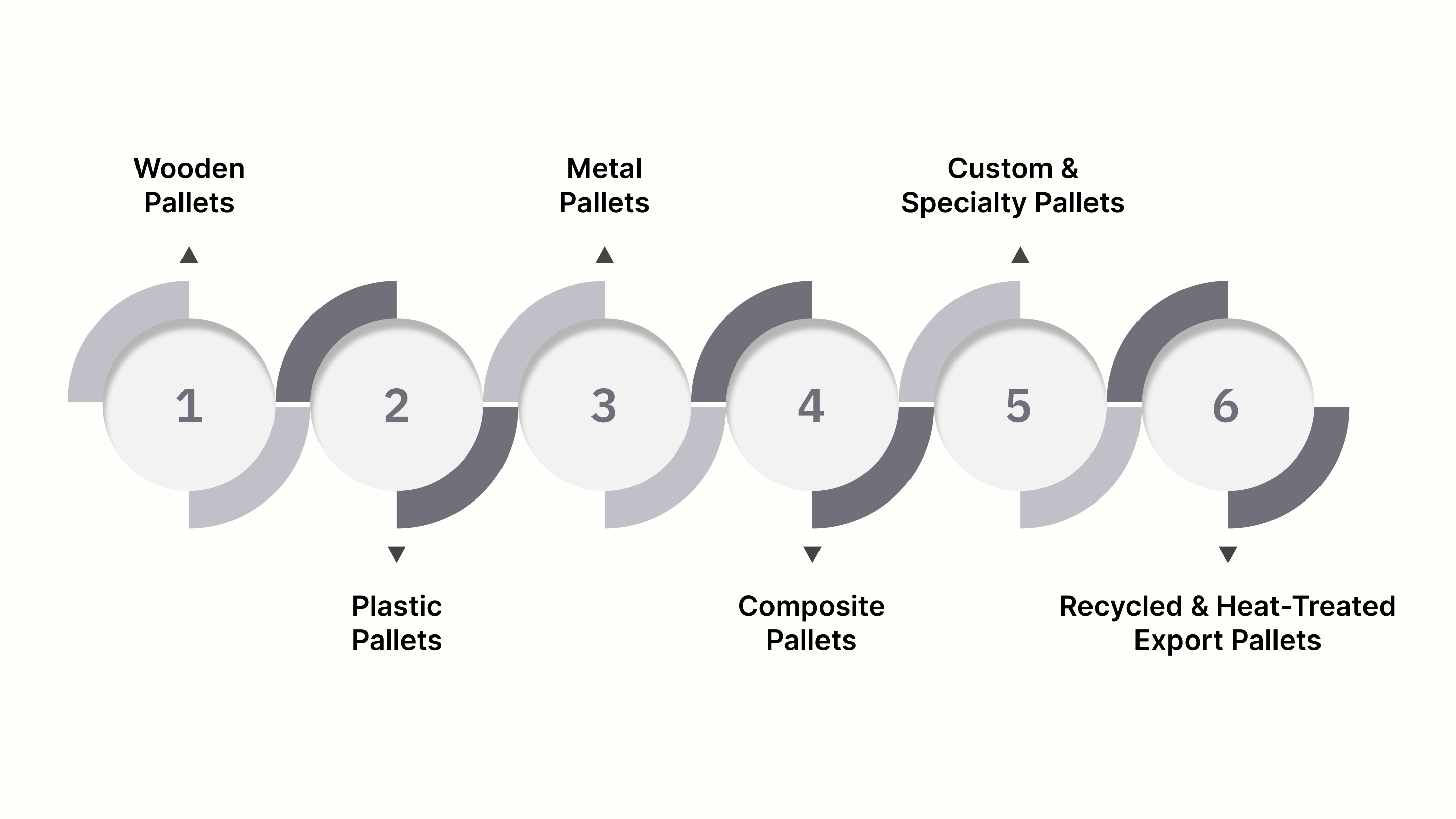
Pallets come in several material options, each offering strengths suited to specific loads, industries, and transportation conditions. Below are the main pallet types and when they perform best:
Wooden Pallets
Wood pallets remain the industry workhorse because they balance strength, repairability, and cost-effectiveness across most supply chains. Many operations favor them for general freight, racking, and bulk storage where initial cost and field reparability matter.
Here are common wood variants and practical considerations:New green pine / SYP (Southern Yellow Pine): High initial strength, good for heavy loads; accepts fasteners well but may require drying for export.
Kiln-dried hardwood: Lower moisture, stable dimensions, and reduced pest risk; commonly chosen for applications similar to AAA GMA 48x40 Pallets where consistency matters.
Reclaimed/repaired hardwood: Cost-effective and sustainable; comparable to Grade B 48x40 Pallets used across general distribution networks.
Board thickness & fasteners: Thicker deck boards and reinforced fasteners increase load capacity, especially in high-turn environments.
Plastic Pallets
Plastic pallets are often chosen for hygiene-sensitive environments and long-term cycles. They resist moisture, chemicals, and pests, which helps prevent contamination in food, pharma, and cold-chain work.
Below are typical plastic constructions and what they mean operationally:HDPE (high-density polyethylene): Durable and impact-resistant for wash-down environments; a choice often compared alongside recycled pallets for lifecycle value.
PP (polypropylene): Handles higher temperatures and harsh cleaners, useful in operations requiring frequent sanitation.
Solid deck vs ventilated deck: Solid decks protect small items; ventilated decks support airflow in cooler environments.
Nestable vs rackable designs: Nestable saves return space; rackable versions mirror the structure of Grade A 48x40 Pallets, where racking strength is required.
Metal Pallets
Metal pallets deliver long service life and extreme load capacity, making them ideal for heavy machinery, automotive components, or hazardous products.
Consider these metal types and design trade-offs:Steel pallets: Highest strength and durability; ideal for very heavy loads, but heavier to move and often costlier to transport.
Aluminum pallets: Lighter and corrosion-resistant for clean environments or high-humidity routes.
Welded vs bolted construction: Welded frames stay rigid; bolted frames allow easier replacement of damaged parts.
Surface coatings: Powder-coating or galvanizing helps resist moisture and chemical exposure.
Composite Pallets
Composite pallets combine wood fibers, plastics, or resins to deliver balanced strength, moisture resistance, and dimensional accuracy. Common composite formats and operational notes:
Fiber-reinforced panels: High stiffness at lower weight; suitable for long export trips using ISPM-15 compliant pallets where moisture shifts are common.
Plastic-wood hybrids: Blend durability with lower cost, and can complement fleets already using combo pallets.
Engineered resin pallets: Built for environments with chemical sensitivity.
Lifecycle considerations: Fewer breakages but occasional recycling constraints depending on resin type.
Custom & Specialty Pallets
Custom pallets support oversized, fragile, or regulated products that don’t fit standard footprints.
Materials and custom features commonly specified:Custom hardwood or engineered boards: Tailored layouts similar to custom pallets used for machinery and one-off builds.
Reinforced frames/skids: Extra beams or steel inserts for heavy or oddly distributed loads.
Integrated fixtures: Fork guides, blocks, or support rails shaped for unique products.
Recycled & Heat-Treated Export Pallets
Recycled pallets extend wood lifecycle and reduce cost, while heat-treated pallets support international shipping without delays.
Key material notes and compliance points:Inspected reclaimed wood: Commonly used in recycled pallet programs to reduce cost while maintaining function.
ISPM-15 heat treatment: Required for export compliance; similar to the standards used in ISPM-15 certified pallets.
Traceability & stamping: Ensures smoother customs movement.
Sustainability trade-offs: Recycled options reduce waste but must be matched to load requirements.
When assessing a national rollout, Meridian’s Packaging Optimization Audit can document SKU-level needs and recommend recycled or heat-treated strategies that meet regulatory and sustainability goals.
Knowing the types gives helpful context, but it’s just as important to see how pallets fit into a larger logistical workflow.
What are Pallets in Logistics?
Pallets streamline how goods move through warehouses, trucks, ports, and storage systems by acting as the universal transport platform in modern logistics.
Here are the roles pallets play across logistics operations:
Improve freight density: Palletized loads maximize trailer, container, and warehouse space by enabling uniform stacking and efficient cube utilization.
Reduce handling time: Every movement becomes faster when goods can be lifted as a single unit instead of individual boxes, trimming labor hours and increasing daily throughput.
Enhance freight protection: Stable bases minimize shock, vibration, and shifting, cutting down on damage claims and replacement costs during transport.
Support cross-docking: Palletized freight transfers quickly between inbound and outbound docks, making same-day distribution practical for high-volume operations.
Enable automation: Conveyors, automated storage systems, and robotic pallet movers depend on consistent pallet sizing and construction to function correctly.
Explore the Procurement Insights Dashboard if you need clearer visibility into pallet spend and supplier performance across locations.
Seeing how pallets move through logistics sets the stage for understanding why businesses rely on them and what advantages they bring.
Benefits of Using Pallets
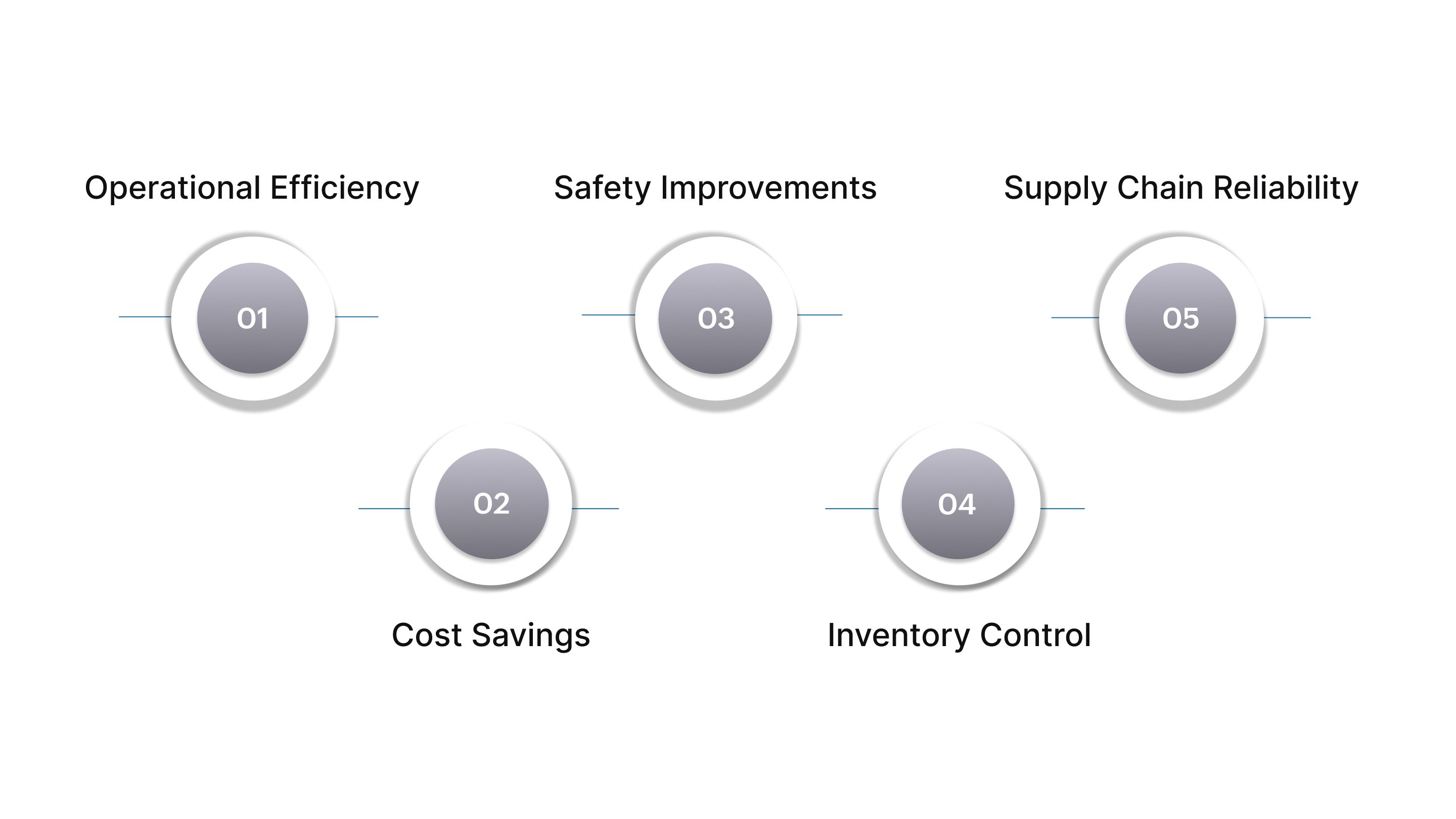
Pallets bring measurable advantages that improve material flow, protect inventory, and optimize warehouse and supply chain performance. Below are the major benefits clearly broken down:
Operational Efficiency
Faster movement across docks, aisles, and production floors increases throughput without adding headcount.
Standardized loads help teams complete shipping and receiving tasks with minimal errors.
Cost Savings
Reduced product damage lowers replacement costs and cuts the frequency of claims.
Reusable pallet options extend lifecycle value and reduce long-term packaging expenses.
Safety Improvements
Less manual lifting reduces injuries and strengthens workplace safety programs.
Stable pallet bases prevent tipping hazards, especially during forklift operations.
Inventory Control
Palletized SKUs are easier to track with scanners, WMS systems, and racking labels.
Consistent pallet locations improve cycle counting and reduce time spent searching for misplaced products.
Supply Chain Reliability
Standard sizing creates compatibility across carriers, ports, and global shipping networks.
Stronger load stability supports sensitive or high-value goods moving through long routes.
These advantages have real-world impact across industries, which makes it useful to look at the common ways pallets are put to work.
Common Uses of Pallets
Pallets support countless applications across industries by improving how materials are stored, transported, and handled.
Below is a table outlining the most common uses:
Use Case | How Pallets Are Used |
|---|---|
Warehousing | Store bulk goods on racking systems, streamline put-away, and maintain clean inventory zones. |
Manufacturing | Move raw materials, assemblies, and finished goods between production stages efficiently. |
Retail Distribution | Transfer palletized goods to distribution centers and stores for rapid restocking. |
Food & Beverage | Support sanitary transport with plastic or treated wood pallets that meet hygiene standards. |
Cold Storage | Keep products stable in low-temperature environments while resisting moisture exposure. |
Export Shipping | Use heat-treated or ISPM-compliant pallets to meet international shipping regulations. |
E-commerce | Speed up fulfillment and outbound shipping by consolidating SKUs on standardized pallet loads. |
Heavy Industry | Hold oversized or dense components using reinforced or metal pallet designs. |
Once you see where pallets are used, it becomes easier to evaluate how to source them efficiently and keep supply consistent across locations.
Unlock Stronger, Smarter Pallet Procurement With Meridian
Meridian helps streamline how pallets are sourced, priced, managed, and delivered across every location so operations stay efficient and fully stocked.
Here are the solutions that directly support your pallet needs:
Automated RFQ Platform: Submit pallet RFQs in under five minutes, access 2,400+ vetted suppliers, compare real-time responses, and secure competitive quotes with 5–25% category savings.
Order Management Portal: Place pallet orders with one click, track deliveries in real time, and maintain 99% uptime through Meridian’s tiered backup supplier network.
Procurement Insights Dashboard: Monitor pallet spend, supplier performance, SKU-level clarity, and commodity pricing trends to make informed decisions instead of reactive ones.
Packaging Optimization Audit: Gain full visibility into pallet and packaging specs, uncover 5–25% savings within 90 days, and receive monthly updates across all locations.
GMA & ISPM-15 Availability: Access certified pallets, including AAA, Grade A, Grade B, recycled, and custom sizes, built near major US markets for faster delivery.
Wrapping Up
A well-designed pallet does far more than hold products; it drives the speed, safety, and reliability of every movement in your supply chain. Understanding what pallets are, how they function, and where they fit in logistics helps you make sharper, cost-effective decisions that support daily operations. Meridian strengthens that foundation with smarter sourcing, clearer data, and nationwide pallet solutions built for uptime and savings.
Visit Meridian today to get a fast, custom pallet quote built around your needs.
FAQ
What is the purpose of pallets?
Pallets provide a stable base for stacking, storing, and transporting goods efficiently. They help protect products while enabling mechanical handling with forklifts and pallet jacks.
What are pallets made of?
Most pallets are made from wood, plastic, metal, or composite materials. Each material offers different strengths depending on load requirements, hygiene needs, and environmental conditions.
What is a pallet in logistics?
In logistics, a pallet acts as the standardized platform that consolidates products into a single unit load for faster movement through warehouses and shipping networks. It supports efficient stacking, tracking, and freight handling.
What are pallets used for?
Pallets are used to store goods in warehouses, organize inventory, and move shipments safely across trucks, containers, and distribution centers. They simplify handling and reduce product damage during transit.
How long do pallets typically last?
The lifespan depends on material type and handling conditions, but well-maintained wood pallets can last multiple cycles, and plastic pallets may last for years. Proper storage and inspection significantly extend their usable life.