A single non-compliant pallet can halt your entire international shipment at customs. The resulting delays lead to demurrage fees, spoiled goods, and missed delivery deadlines that damage customer relationships. Many companies discover these costly compliance gaps only after their cargo is rejected at the border.
Understanding and verifying the IPPC stamp is a fundamental requirement for any business shipping goods internationally in wood packaging. It is not a suggestion but a mandatory phytosanitary regulation designed to prevent the global spread of pests and diseases.
This guide explains the IPPC stamp in clear, operational terms. You will learn to decode its components, ensure your suppliers meet the standard, and integrate compliance into your procurement process to avoid costly supply chain disruptions.
At a Glance
All solid wood packaging materials must meet the International Standard for Phytosanitary Measures No. 15.
The IPPC stamp must be clear, permanent, and include the globally recognized wheat-stalk logo.
Compliance requires either Heat Treatment (HT) or Methyl Bromide (MB) fumigation, with HT being the industry standard.
Non-stamped or damaged WPM risks rejection, mandatory re-export, or expensive destruction by customs.
Using a single, vetted network for WPM improves quality consistency and guarantees compliance across all sites.
WPM made from highly processed wood, like plywood, particleboard, or veneer, does not require the ISPM 15 stamp.
What is the IPPC Stamp?
The IPPC stamp is an internationally recognized symbol required on all regulated wood packaging material (WPM). This mark verifies that the wood has been properly treated to eliminate pests harmful to global ecosystems.
It serves as a passport for pallets, crates, and dunnage moving across international borders.
Importance of the IPPC Stamp:
Ensures Global Trade Flow: The stamp acts as a standardized confirmation, streamlining customs clearance processes worldwide.
Protects Ecosystems: It prevents the international spread of invasive insects and plant diseases commonly found in raw wood.
Mitigates Financial Risk: Properly marked WPM avoids costly import delays, significant customs fines, and shipment rejection.
Guarantees Compliance: The mark confirms the wood has undergone the mandatory treatment process outlined by ISPM 15 standards.
The stamp is the present-day solution, but understanding its global mandate requires reviewing the regulatory body that established the standard.
How was IPPC Founded?
The International Plant Protection Convention (IPPC) was founded to establish a global framework for plant health protection. The need for a unified standard arose due to the frequent transfer of timber pests inside wood packaging material.
The IPPC created the ISPM 15 regulation to ensure WPM receives the required treatment before international shipment. This standard provides a crucial barrier against the global distribution of forest pests.
The IPPC’s primary tool for enforcement is the physical mark itself, which acts as a complete traceability record for customs and auditing.
Components of the IPPC Stamp

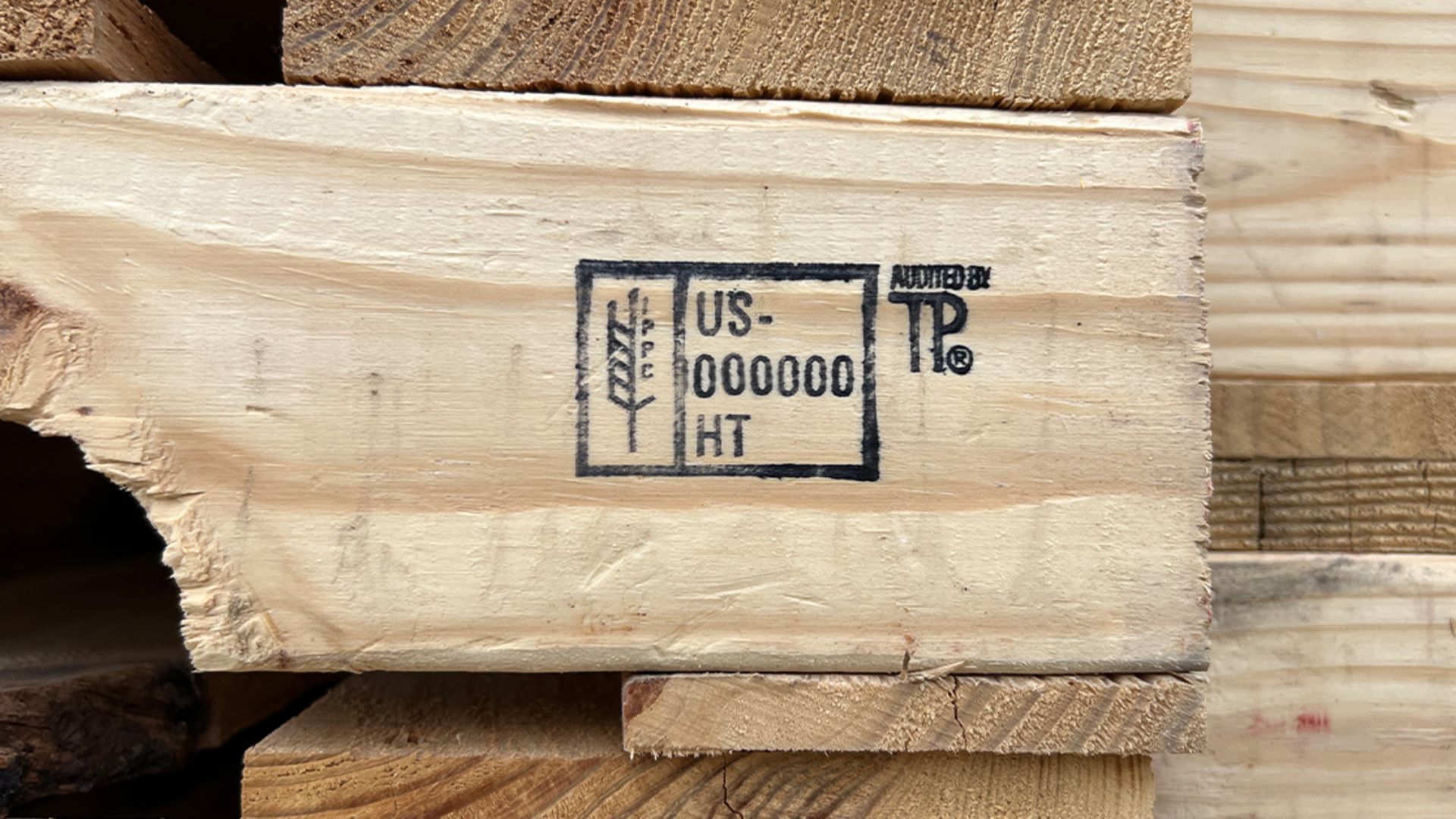
The IPPC mark is a non-transferable mark with distinct elements that provide complete supply chain traceability. This stamp must be clearly visible on at least two opposite sides of the regulated wood item. The stamp is the primary evidence of compliance for customs officials.
Key Identifiers Present in the Stamp:
IPPC Logo: This is the internationally recognized logo featuring a stylized wheat-stalk symbol that confirms adherence to the Convention.
Country Code (XX): This two-letter ISO country code identifies the country where the wood treatment took place, such as US for the United States.
Producer/Treatment Provider Code (000): This unique code is assigned by the National Plant Protection Organization (NPPO). It links the pallet or WPM directly back to the facility responsible for the treatment.
Treatment Code (YY): This code identifies the specific method used to treat the wood material for pest elimination. Common codes include HT for heat treatment and MB for methyl bromide.
While the components explain how the wood was certified, you must also know which specific materials the ISPM 15 regulation actually applies to.
Requirements for IPPC Stamp
The ISPM 15 standard applies specifically to raw wood packaging material (WPM) used to support, protect, or carry a commodity. If you are shipping internationally, understanding which materials require the IPPC stamp on pallets is essential for avoiding penalties.
This regulation focuses on solid wood that has not been manufactured using glue, heat, or pressure.
Types of Wood Packaging Material Requiring the Stamp:
Pallets and Skids: All wooden pallets, including stringer and block pallets, require the IPPC stamp for trade between participating countries.
Crates and Boxes: Solid wood crates, boxes, and containers used for international shipping must also display the compliant marking.
Dunnage: Loose wood materials used to brace cargo or secure items within a container must also be certified and stamped.
Exempt Wood Materials:
Processed Wood: WPM made entirely from processed materials like plywood, particleboard, veneer, and oriented strand board (OSB) is exempt.
Thin Wood: Wood that is less than six millimeters (0.24 inches) in thickness is generally excluded from the ISPM 15 requirements.
Barrel Casks: Finished wooden products like wine barrels or gift boxes made from fine wood shavings are often exempt.
Uncertain if your current WPM is compliant? Request a Packaging and Pallet Audit to identify hidden ISPM 15 risks. Contact our experts now.
Knowing which materials must be stamped leads directly to the next critical question: how is this compliance granted and tracked within the supply chain?
Certification Process and Marking
Sourcing compliant WPM means relying on treatment providers who follow strict national and international guidelines. This process ensures the material used in your supply chain is properly regulated from treatment to stamping.
Understanding this compliance chain provides clarity on the quality standards applied to your packaging. Achieving ISPM 15 compliance involves these specific stages:
National Plant Protection Organization (NPPO) Oversight
The NPPO, such as the USDA in the United States, manages the ISPM 15 program within its territory. This national body audits and accredits third-party agencies to monitor and certify treatment providers.
Auditing and Licensing
Wood packaging facilities must pass rigorous inspections to prove their treatment processes meet the ISPM 15 heat or fumigation standards. Once accredited, the facility receives a unique registration number, which becomes part of the stamp.
Proper Application of the Mark
The certified facility is then authorized to apply the official IPPC stamp to the WPM. The mark must be permanent, legible, and non-reusable, typically branded or stenciled in a color that contrasts with the wood.
The integrity of these specific markings is controlled by the overarching regulatory framework known as ISPM 15, which dictates the necessary protocols for global trade.
ISPM 15 Standards and Regulations
ISPM 15 is the single regulation that governs the phytosanitary treatment of wood packaging material across the world. It provides a technical protocol that all participating countries must follow to minimize the risk of spreading harmful organisms.
Maintaining strict adherence to this standard is mandatory for predictable global distribution.
Key Aspects of the ISPM 15 Standard:
Mandatory Treatment: All regulated WPM must be subjected to an approved treatment, either heat or fumigation, before being stamped and shipped.
Key WPM Definition: The standard specifically defines WPM as wood that is raw, meaning it is not derived from materials like particleboard, which are processed.
Global Acceptance: The ISPM 15 rules are accepted by the World Trade Organization and are required by nearly all major trading countries worldwide.
Achieving compliance under the ISPM 15 standard requires the wood to undergo one of two internationally approved methods designed to eliminate pests.
Treatment Methods for Compliance
Meeting ISPM 15 compliance relies on eliminating all living organisms, including insects and larvae, from the wood fibers. The two approved methods achieve this objective differently, with varying costs, speeds, and environmental impacts.
Procurement decisions often focus on the suitability and sustainability of the treatment type. Compliance is achieved through one of two internationally accepted treatment methods:
Heat Treatment (HT)
The WPM is placed in a kiln or chamber and heated until the wood's core reaches a minimum temperature of 56°C (133°F). This temperature must be maintained for at least 30 continuous minutes. HT is the preferred and most environmentally acceptable method globally.
Advantages: Environmentally friendly, leaves no chemical residue, widely accepted globally, and increasingly preferred.
Considerations: Requires significant energy and specialized equipment.
Methyl Bromide (MB) Fumigation
The WPM is exposed to the gaseous pesticide methyl bromide for a prescribed period and concentration. While effective, this treatment is being phased out in many regions due to environmental concerns regarding ozone depletion.
Advantages: Can be effective for certain types of wood or situations where heat treatment is not feasible.
Considerations: Methyl bromide is an ozone-depleting substance. Its use is heavily restricted and being phased out under the Montreal Protocol. Many countries now discourage or refuse MB-treated wood.
Choosing the Right Method
Procurement teams increasingly specify HT-treated WPM to ensure compliance in all trade zones and support sustainability goals. Relying on MB-treated pallets can introduce friction or compliance issues in regions with stricter environmental policies.
Sourcing the correct HT-certified WPM is only possible if your procurement strategy is strong enough to guarantee quality and avoid non-compliant suppliers.
Maintaining IPPC Compliance in Your Supply Chain with Meridian
Fragmented pallet sourcing increases the risk of non-compliant wood packaging. This leads to costly customs delays and supply chain disruption. A centralized procurement strategy is needed for consistent quality and compliance visibility.
Meridian provides a technology-driven solution that standardizes your WPM procurement and guarantees regulatory adherence. We replace fragmented sourcing with a unified network, using digital tools to verify compliance status and control costs.
This model helps reduce the operational risk associated with global trade. Here’s why you should choose us:
Quality Assurance: We source certified AAA GMA or Grade A pallets, ensuring the structural integrity necessary for high-density storage and automated systems.
2,400+ Vetted Network: Access a vast supplier network that provides consistent ISPM 15 compliance and reliable local supply for all your distribution centers.
Procurement Insights Dashboard: Gain real-time visibility into WPM quality, supplier performance, and total spend leakage across all orders and facilities.
RFQ Automation: Instantly distribute quote requests for compliant WPM, reducing manual procurement time and cycle inefficiencies.
Optimization Audits: Our experts review your WPM specs to identify cost-efficient alternatives that maintain compliance while reducing material spend.
Meridian acts as your strategic partner to manage the complexity of global WPM compliance and reliable supply.
Final Thoughts
The IPPC marking is a non-negotiable requirement for international trade, acting as a critical barrier to global pest transmission. Strict adherence to ISPM 15 standards minimizes border delays, avoids financial penalties, and ensures your shipments move predictably across global supply lines.
Compliance is the foundation of dependable international logistics. Meridian simplifies this critical compliance step by centralizing your WPM sourcing, guaranteeing certified quality, and providing digital tools for spend control.
We ensure that every pallet entering your supply chain is audit-ready and compliant with ISPM 15 requirements.
Contact our team about securing a compliant, cost-effective pallet supply for your global distribution.
FAQs
Q. What does the HT on an IPPC stamp mean?
The HT code stands for Heat Treatment, meaning the wood was heated to a core temperature of 56°C for 30 minutes. This is the primary and most common method for achieving ISPM 15 compliance.
Q. Does the IPPC stamp indicate the pallet can be reused?
The stamp only indicates that the wood has been treated for pests, not its structural quality or reuse grade. Pallet reusability depends on its physical condition and quality grading (e.g., AAA or Grade A).
Q. What happens if a shipment arrives without an IPPC stamp?
Customs officials will typically reject the shipment, order the destruction of the WPM, or require costly quarantine and mandatory treatment. The shipper is responsible for all associated delays and charges.
Q. Do pallets used for domestic shipping need an IPPC stamp?
No, the ISPM 15 regulation and the IPPC stamp are only mandatory for wood packaging material used in international trade between participating countries.
Q. Is the IPPC stamp required for plastic pallets?
No. Plastic, metal, and WPM made from highly processed materials like plywood or particleboard do not require the ISPM 15 stamp because they are not considered a host for wood-boring pests.
Q. Where should the IPPC mark be located on a pallet?
The IPPC marking must be placed on at least two visible, opposite faces of the pallet, typically on the stringers or blocks. The mark must be legible and permanent.