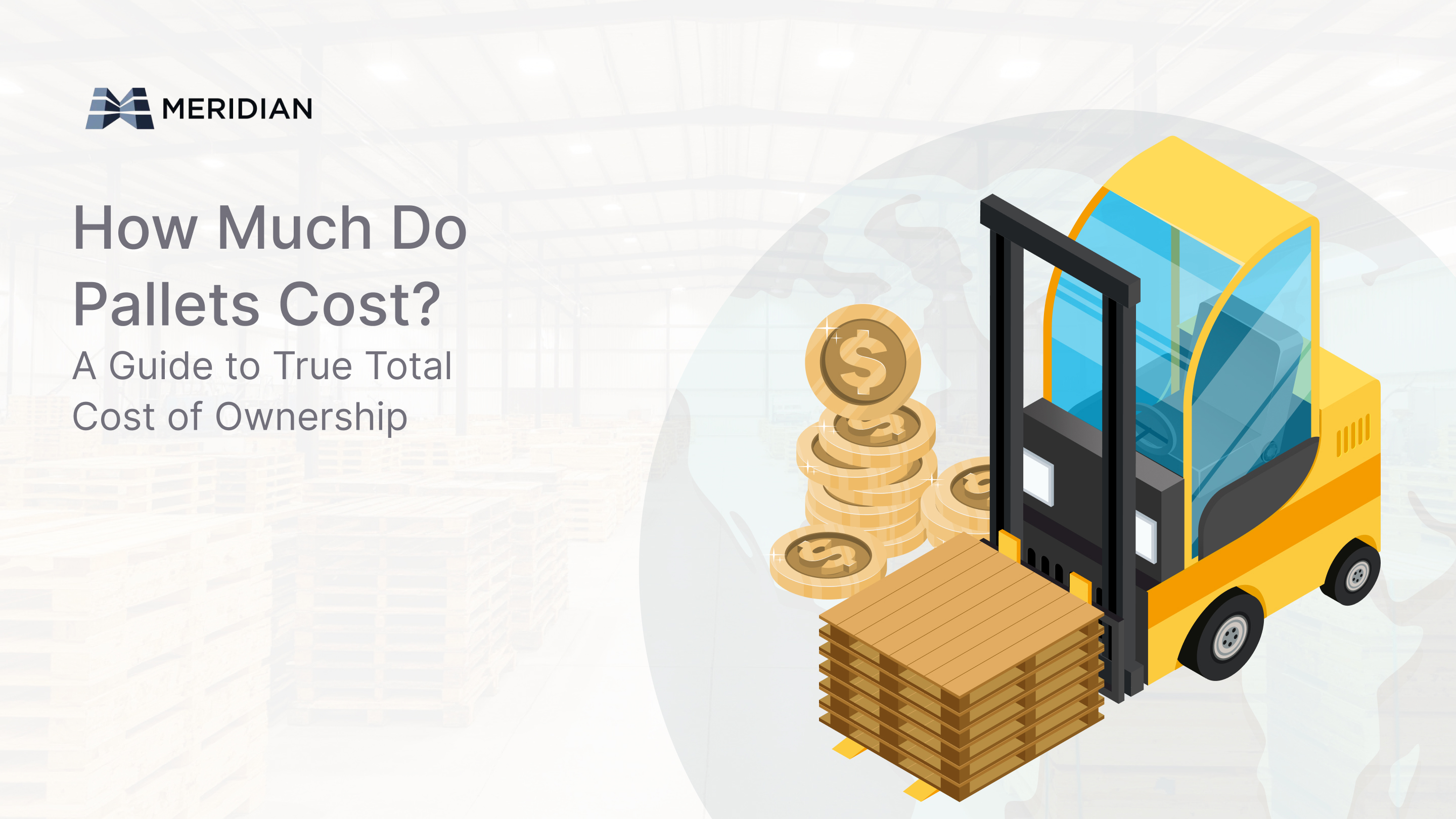
The invoice price for a pallet is just the beginning. For procurement teams, the real challenge is hidden costs: sudden price hikes from local suppliers, freight surcharges for under-spec pallets that fail, and the labor spent managing dozens of fractured supplier relationships. These variables turn a simple line item into a source of budget volatility and operational risk.
Understanding the true total cost of ownership (TCO) shifts pallet procurement from a reactive expense to a managed category. It provides the framework to evaluate not just unit cost, but reliability, compliance, and process efficiency.
This guide details the factors that determine how much pallets cost. You will learn how lumber markets and pallet grades set the baseline, how compliance affects price, and five actionable strategies to control and reduce your total pallet spend.
Quick Look
Pallet costs are tied to the lumber market (e.g., Fastmarkets RISI index). When raw material costs rise, new pallet prices follow immediately, dragging recycled prices up with them.
New GMA pallets typically cost significantly more than recycled alternatives. Switching to recycled is the fastest way to reduce direct spend.
The lowest-priced pallet often carries hidden costs, such as higher failure rates, debris cleaning, and production downtime.
Less-than-truckload (LTL) orders drastically increase the per-unit landed cost. Ordering full truckloads (approx. 500–600 pallets) optimizes freight spend.
Custom footprints require unique setups and non-standard lumber cuts, often costing more than standard 48x40 sizes.
4 Factors That Influence Pallet Prices
The price you see on an invoice is the result of several supply chain variables. Understanding these inputs allows you to have more informed negotiations with your suppliers.
Here are the primary pallet cost drivers:
Lumber Market and Regional Availability
Wood makes up the bulk of a pallet's cost structure. Prices track with softwood and hardwood indices. Furthermore, regional availability matters; if a local mill shuts down or construction demand spikes in your region, local pallet prices will rise due to material scarcity.
Pallet Grade and Construction (AAA vs. A vs. B)
The amount of labor and quality of lumber determine the grade. A Grade AAA (like-new) pallet commands a premium because it guarantees consistent dimensions for automation. A Grade B pallet is cheaper because it contains plugs (repairs) and cosmetic defects, requiring less labor to refurbish.
Treatment and Compliance (HT, MB)
Exporting goods requires ISPM 15 compliance. Heat Treatment (HT) adds to the unit cost to cover the energy and kiln time required. Failure to pay for certified compliant pallets results in rejected international shipments.
Order Volume and Logistics
Freight is a massive component of the "landed cost." A supplier must amortize the delivery cost across the number of units ordered. Ordering 100 pallets bears a much higher freight cost per unit than ordering a full trailer of 600 pallets.
With these factors in mind, we can look at estimated price ranges for the most common pallet types used in US distribution.
What Are Some Common Pallet Types and Their Cost Ranges?
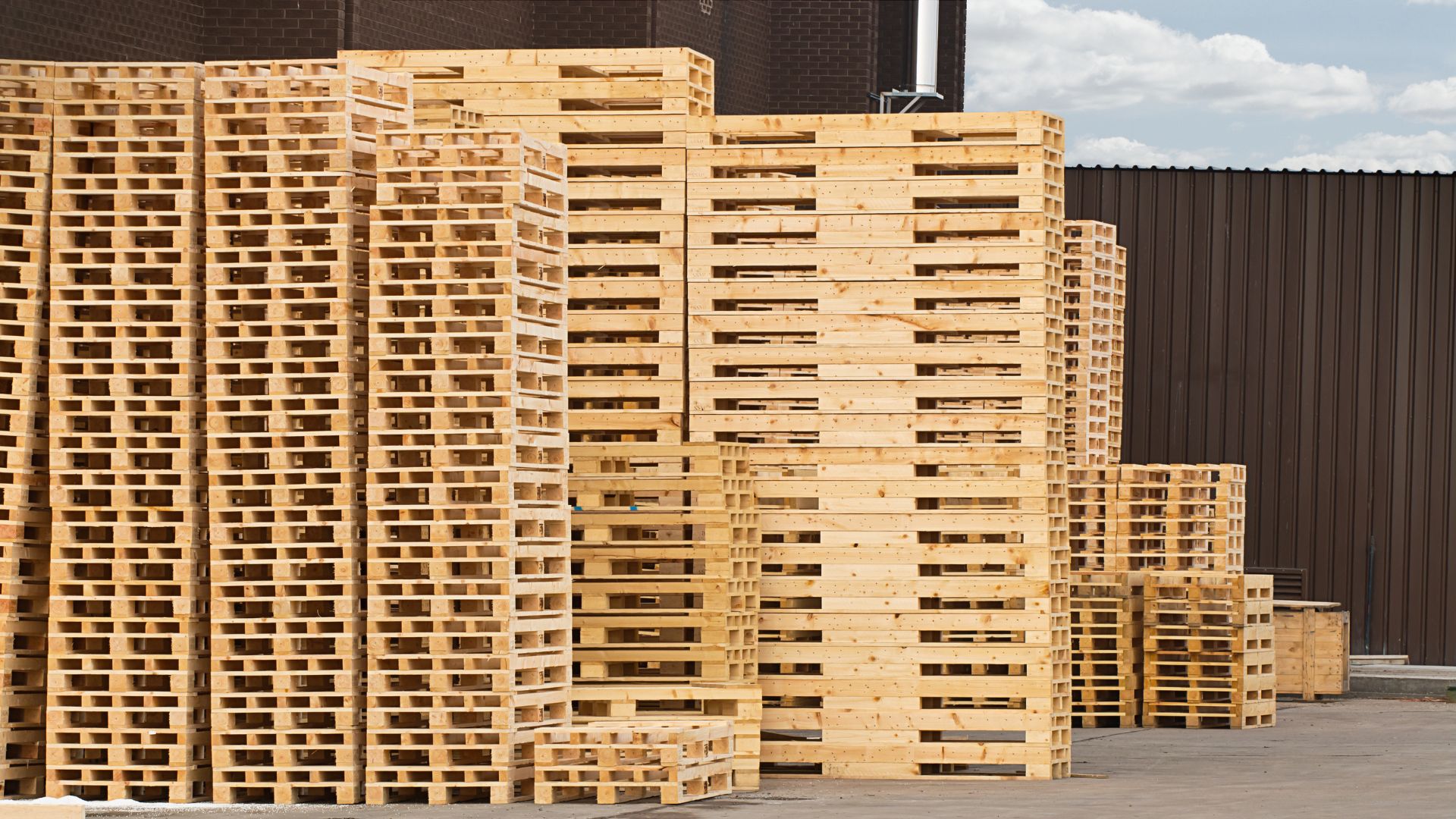
While prices change weekly based on the lumber market, having a baseline range helps in budget planning. These estimates reflect typical US market conditions for standard 48x40 pallets.
Wood GMA Stringer Pallets
These are the standards for US grocery and retail distribution. Its cost is highly sensitive to lumber prices and grade. You can expect a broad range, with Grade B recycled pallets at the lower end and Grade AAA new pallets at the higher end. This versatility makes them the default for most general distribution.
Wood Block Pallets
Constructed with both stringers and blocks for four-way forklift entry, block pallets offer superior strength and racking ability. They use more lumber and require more complex construction, resulting in a higher per-unit cost.
This investment is justified for heavy loads, long-term storage, or closed-loop systems where durability is critical.
Plastic and Metal Pallets
These represent a significant upfront capital investment, often costing many times more than a wooden pallet. Their value proposition is an extremely long lifespan, hygiene (crucial for food/beverage or pharmaceuticals), and consistent dimensions for automation.
The TCO can be favorable in controlled, high-volume loop systems where pallets are retrieved and reused hundreds of times.
Specialty Pallets
Pallets designed for aerospace, chemical, or pharmaceutical industries fall into this category. They may require certified materials, specific fire ratings, or extreme weight capacities. Costs are customized and project-specific, driven by engineering, material, and low production volumes.
Request a quote for our GMA Grade AAA pallets here.
The type of pallet you choose is the first major cost determinant, but the second is its condition. Understanding the trade-offs between new and recycled pallets is critical for matching your purchase to its application and controlling long-term costs.
Pallet Cost Based on Pallet Condition: New vs. Used/Recycled
The condition of the pallet is the single biggest lever for cost reduction. Here’s what you need to know:
New Pallets
Constructed from virgin lumber. You pay for material consistency and aesthetics. Prices are highly volatile, reacting instantly to lumber index spikes. Use these only when customer specs or hygiene rules (e.g., pharma/food) strictly mandate it.
Recycled/Repaired
Constructed from recovered cores. Pricing is more stable than new lumber, but supply can be constrained. A good recycling program can lower your unit cost compared to buying new, without sacrificing load capacity in most general applications.
Request a quote for our recycled pallets here.
Beyond condition, the decision to use a custom footprint versus a standard size impacts your budget significantly.
What to Expect for Costs: Custom vs. Standard Pallets
Standardization is the friend of procurement efficiency. Deviating from the standard 48x40 footprint introduces manufacturing inefficiencies that suppliers pass on to you.
Standard Pallets
Producers manufacture 48x40 GMA pallets in high volume using automated nailing machines. This automation reduces labor costs. Additionally, standard pallets are easily sourced from suppliers in the US, creating price competition that benefits the buyer.
Customized Pallets
If you need a 60x60 pallet, the supplier must stop their automated lines and often build them by hand. They also generate more lumber waste, cutting non-standard lengths. Expect to pay a premium for labor, waste, and setup time.
Furthermore, custom pallets have little to no resale value, increasing your disposal costs.
Knowing the costs is step one; implementing strategies to control them is step two.
5 Best Practices for Buyers to Save Costs
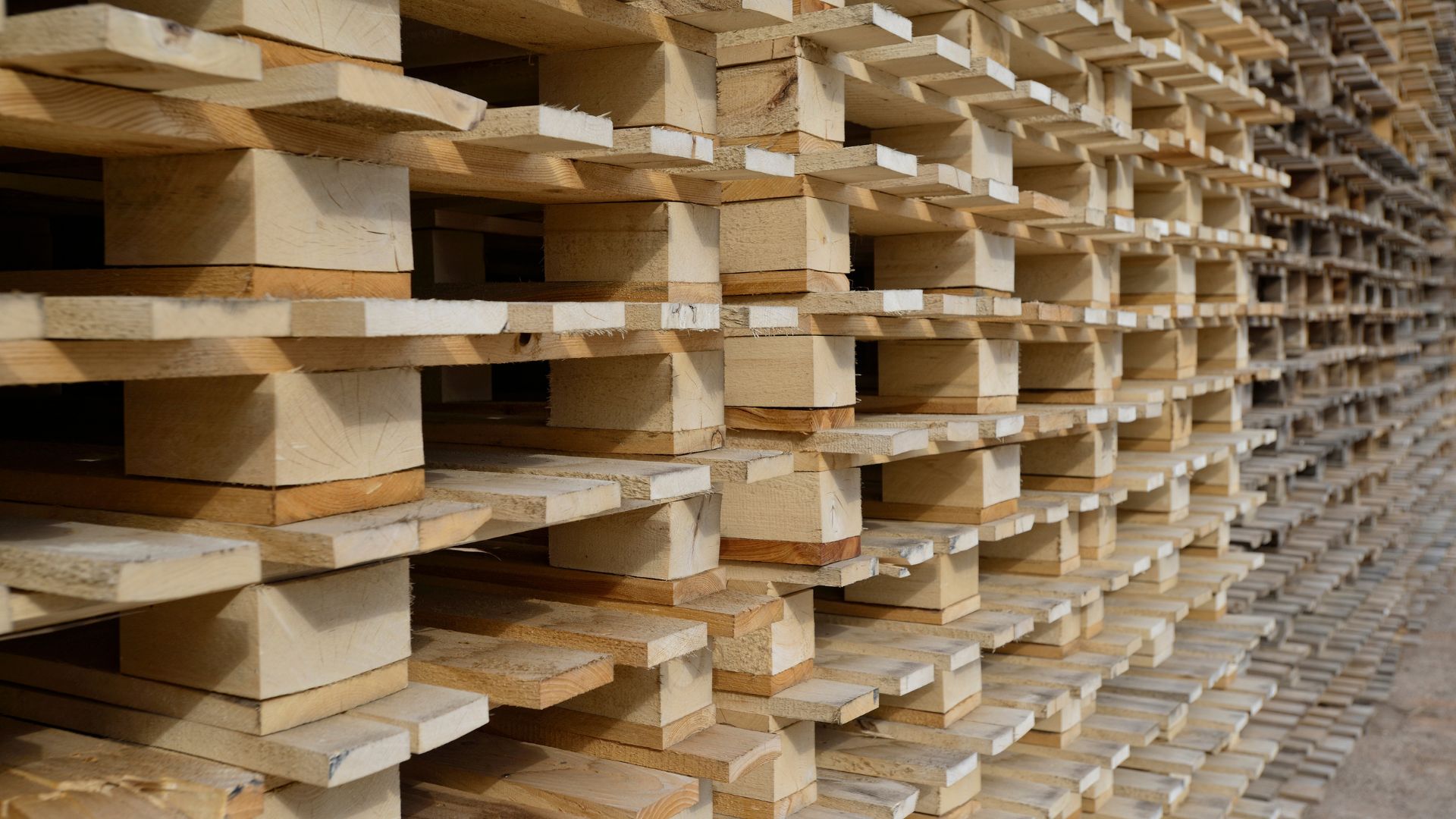
Reducing your pallet spend requires looking at the total lifecycle of the packaging, not just the invoice price.
Here are actionable strategies to lower your TCO:
Standardize Specifications to Aggregate Buying Power
If one facility orders Grade A and another orders Grade B for the same application, you are losing leverage. Standardizing specs across all locations allows you to negotiate volume pricing for a single SKU, rather than spot-buying various types.
Implement a Digital RFQ Process for Transparent Bidding
Manual phone calls and emails to local suppliers limit your options. Using a digital platform to distribute RFQs ensures you receive competitive bids from a wider network of vetted suppliers, exposing the true market rate.
Calculate and Negotiate Based on Total Cost of Ownership (TCO)
A cheaper pallet that causes a line jam costs more than a quality pallet. Factor in "cost per trip" rather than "cost per pallet."
TCO Formula: (Unit Price + Freight + Storage + Disposal) / Number of Trips.
Conduct a Packaging Audit to Right-Spec Your Pallets
You might be overspending on heavy-duty pallets for lightweight loads. An audit analyzes your load capacity needs. Downgrading from a Premium Grade A to a Standard Grade A, or moving from new to recycled, can yield immediate savings.
Develop Strategic Supplier Relationships Beyond Price
In tight markets, availability is worth more than the lowest pallet price. A strategic partner with a large network guarantees supply continuity when local mills run dry, preventing costly production shutdowns.
Implementing these best practices requires data and network reach that many internal teams lack.
Transforming Pallet Cost Management from Challenge to Control with Meridian
Procurement managers often lack visibility into their fragmented pallet spend. Managing dozens of local suppliers leads to price variances, inconsistent grading, and an inability to track total category spend. Without centralized data, you cannot identify where you are overpaying or where operational inefficiencies exist.
Meridian acts as your strategic sourcing partner to bring clarity and control to your pallet procurement. We utilize a network of 2,400+ vetted suppliers and proprietary digital tools to optimize your supply chain.
Aggregated Buying Power: We combine demand across our client base to secure better rates than individual sites can negotiate alone.
Spend Visibility: Our dashboards provide a clear view of spending patterns by facility, grade, and supplier.
Optimization Audits: Our experts review your specs to ensure you aren't paying for more pallets than you need, often uncovering 15–30% savings.
Reliable Supply: We guarantee supply continuity through our massive network, insulating you from local market disruptions.
Meridian transforms pallet procurement from a tactical headache into a strategic advantage.
Final Thoughts
Understanding the cost of pallets requires looking beyond the unit price to market drivers, material types, and operational impact. By shifting focus to Total Cost of Ownership and standardizing your specifications, you can protect your budget from market volatility.
Meridian provides the data, network, and expertise to execute this strategy. Whether you need to benchmark your current pricing or audit your specs for savings, our team delivers the insights you need.
FAQs
Q. What is the cheapest type of pallet?
The cheapest option is typically a recycled Grade B wood pallet (often called a #2). These have been repaired and may have cosmetic defects, but they offer the lowest price point for one-way shipping.
Q. Why did pallet prices go up so much recently?
Pallet cost is directly tied to the lumber market and labor availability. When construction demand rises, lumber prices spike, increasing the cost of new pallets. This drives demand for recycled pallets, subsequently raising their prices as well.
Q. How much does a standard 48x40 pallet cost?
As of current market conditions, a recycled 48x40 Grade A pallet typically costs between $9.00 and $14.00, while a new GMA pallet can range from $15.00 to $28.00, depending on lumber prices and volume.
Q. Is it cheaper to buy new or recycled pallets?
It is almost always cheaper to buy recycled pallets. Recycled units typically cost less than new pallets of the same dimensions, making them the preferred choice for most domestic shipping.
Q. Does heat treatment increase the cost of a pallet?
Yes. Heat Treatment (HT) for ISPM 15 compliance increases the cost of a pallet. This covers the energy, equipment, and handling required to heat the wood core to 56°C for 30 minutes.
Q. What is the cost difference between wood and plastic pallets?
Lightweight export plastic pallets can be comparable to new wood prices, but durable, rackable plastic pallets are significantly more expensive.