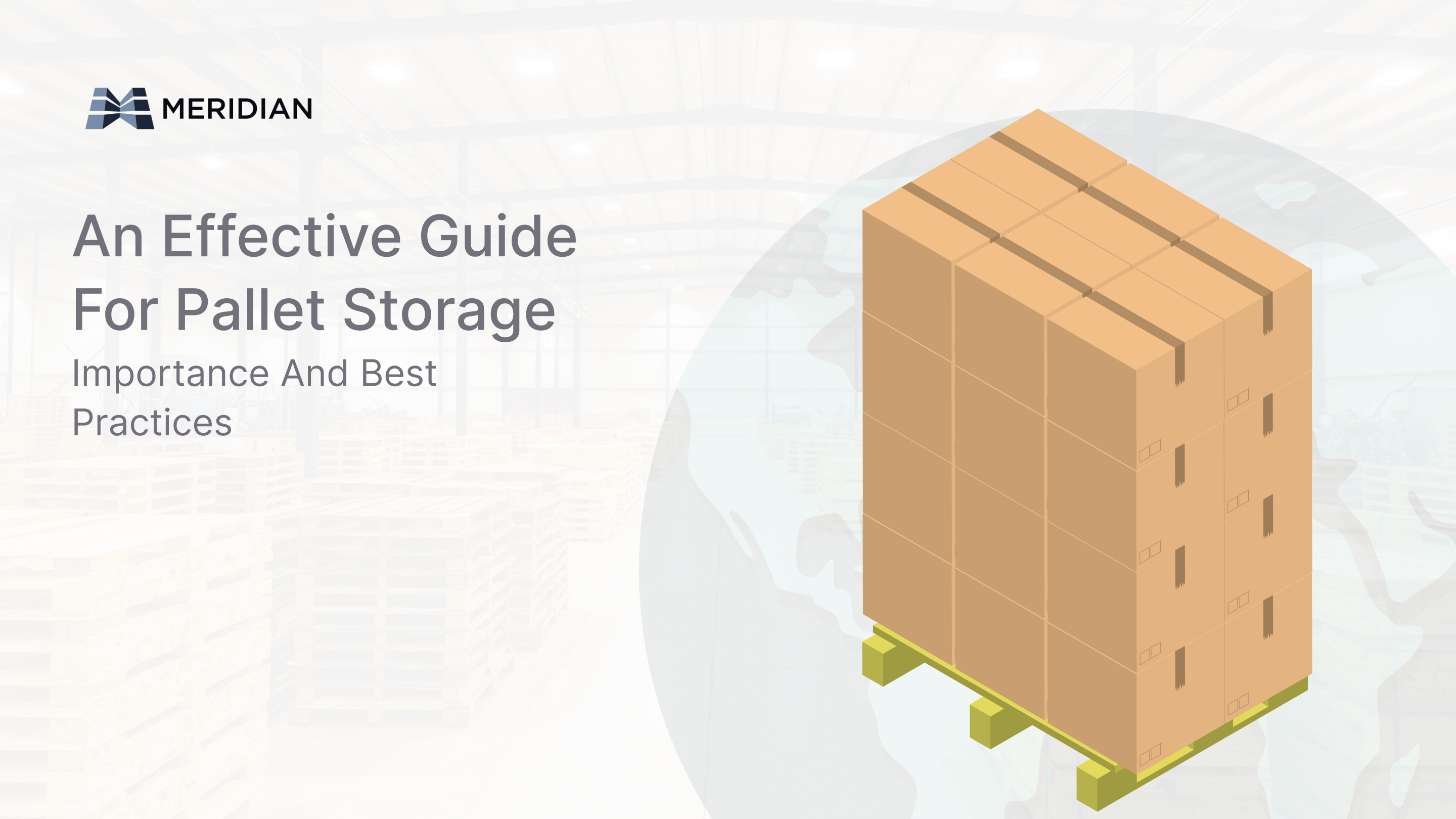
Inefficient pallet storage silently drains your operational budget. Wasted vertical space, damaged inventory from poor stacking, and delays from chaotic aisles directly increase your cost per pallet stored and handled.
Optimizing your pallet storage is a direct lever for reducing warehouse costs, improving safety, and accelerating throughput. It turns your storage area from a liability into a strategic asset.
This guide provides an operational framework for pallet storage. You will learn to calculate your true capacity, select the right storage system, and implement practices that protect your inventory and your bottom line.
Quick Look
Choose your storage method based on inventory turnover. Use Pallet Flow for FIFO (First-In, First-Out) and Drive-In racking for LIFO (Last-In, First-Out).
Measure the ratio of storage capacity to total floor area. High-density systems can increase capacity by half compared to standard selective racking.
Using consistent GMA 48x40 pallets eliminates "dead space" in racks and prevents load instability caused by mismatched dimensions.
Track empty positions within deep-lane storage. High honeycombing rates indicate your storage lanes are too deep for your SKU volume.
Expanding upward is cheaper than expanding outward. Ensure your fire suppression system allows for higher stacking to maximize cubic utility.
Broken stringers or missing deck boards compromise structural integrity in racks, leading to potential collapse or automated system jams.
What is Pallet Storage?
Pallet storage refers to the systematic organization of loaded pallets within a warehouse or distribution center to maximize space utilization and accessibility. It encompasses both floor stacking (block stacking) and various racking infrastructures designed to hold inventory vertically.
The goal is to balance storage density with the required speed of retrieval for shipping or production.
Understanding the definition is simple, but recognizing the strategic value of optimized storage is what drives profitability.
Importance of Pallet Storage
An optimized storage strategy allows operations to scale without acquiring new real estate. It transforms the pallet storage warehouse from a disorganized holding area into a high-velocity fulfillment engine.
Here are the specific operational benefits of a structured approach:
Maximizing Cubic Utilization
Warehouses pay for volume, not just square footage. Effective storage systems capitalize on vertical height, allowing you to store three to four times more inventory in the same footprint compared to floor stacking. This directly lowers the facility cost per unit.
Improving Inventory Rotation and Flow
Different industries require different rotation methods. Food and beverage operations need strict FIFO to prevent spoilage, while construction materials often use LIFO. The right storage infrastructure enforces these rules physically, reducing the risk of obsolete inventory.
Enhancing Warehouse Safety
Structured racking systems prevent dangerous "leaning towers" often seen in block stacking. Defined storage locations keep aisles clear for forklifts and pedestrians, significantly reducing the rate of workplace accidents and product damage.
Secure your pallet supply with Meridian. Our managed network of over 2,400+ nationwide suppliers ensures 99%+ supply uptime and eliminates the risk of production-stopping stockouts. Get in touch now.
To realize these benefits, you must first establish a baseline by measuring your current storage efficiency.
Key Metrics to Calculate Warehouse Pallet Storage Density
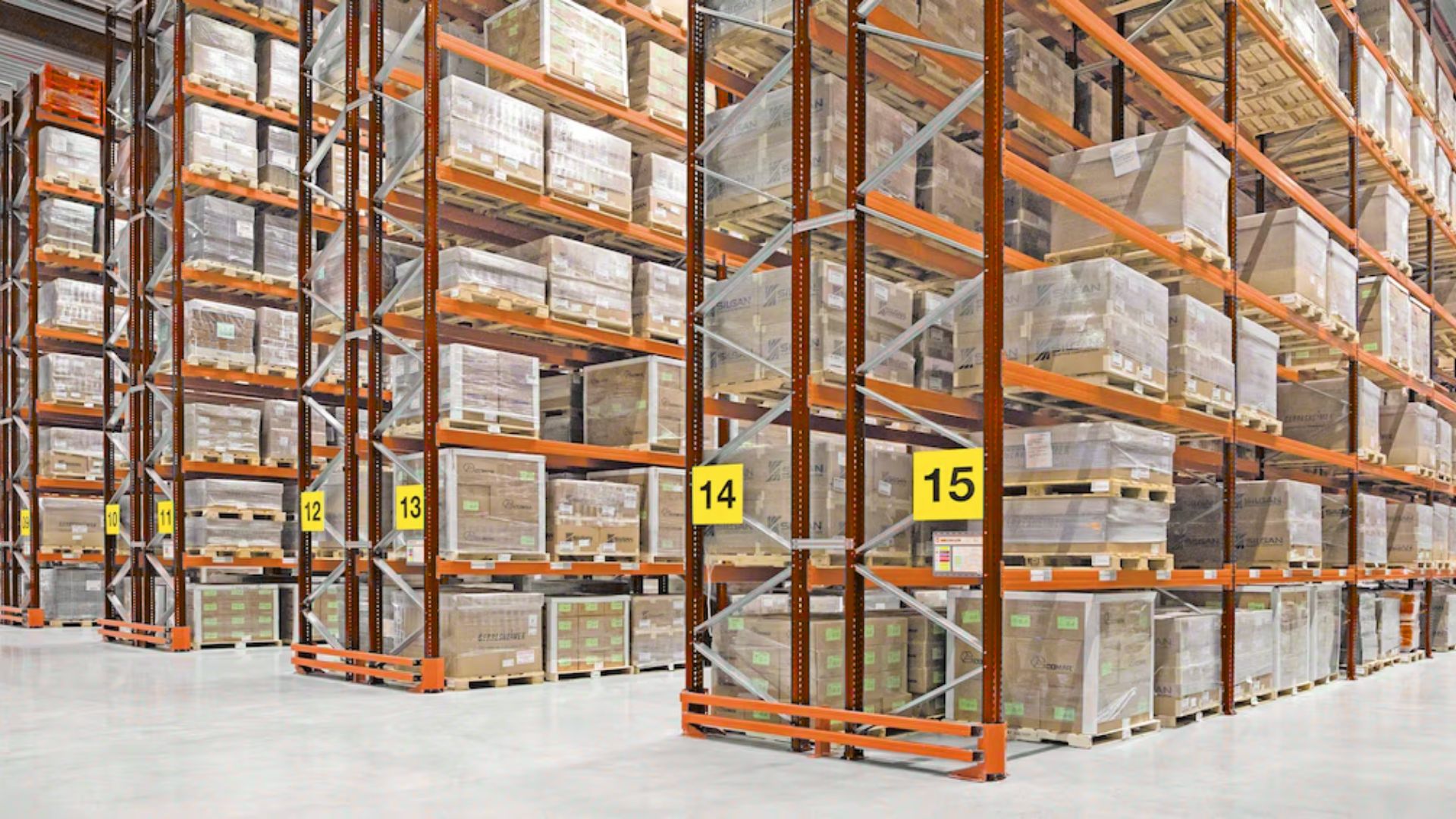
You cannot improve what you do not measure. Evaluating the efficiency of your current layout requires tracking specific density and utilization metrics.
These formulas expose hidden inefficiencies in your current setup:
Honeycombing Percentage
This measures the empty space lost in deep storage lanes when a pallet is removed, and the slot cannot be immediately refilled. It is critical for evaluating Drive-In or Push-Back rack efficiency. A high percentage suggests your lanes are too deep for your specific SKU velocity.
Floor Utilization Rate
This compares the area occupied by storage equipment to the total facility area. While maximizing this is good, pushing it too high (above 85-90%) can create congestion that slows down forklift movement and shipping docks.
Aisle Width Ratio
Narrowing aisles increases storage space but requires specialized lift trucks. You must calculate the trade-off between gaining extra pallet positions and the capital cost of wire-guided or turret trucks needed to navigate Very Narrow Aisles (VNA).
Once you understand your density metrics, the next step is selecting the physical racking infrastructure that best supports your numbers.
Types of Pallet Storage Solutions
Selecting the right racking infrastructure depends on your SKU count, volume per SKU, and budget. There is no one-size-fits-all solution for every pallet storage warehouse.
Here are the primary systems used in modern distribution centers:
Selective Pallet Racking
This is the most common system, offering direct access to every single pallet. It uses standard forklifts and offers the lowest implementation cost, but provides the lowest storage density since it requires numerous aisles.
Best for:
High SKU counts with low volume per SKU.
Operations requiring 100% accessibility to all inventory.
Fast-moving consumer goods (FMCG) with rapid turnover.
Drive-in / Drive-Through Racking
This high-density system eliminates aisles by allowing forklifts to drive directly into the rack structure. It stores pallets multiple positions deep, making it ideal for LIFO inventory management.
Best for:
Storing large quantities of the same SKU.
Products with no expiration date concerns (LIFO).
Cold storage facilities where space is expensive.
Push-Back Racking
Pallets sit on wheeled carts that rest on rails. When a new pallet is loaded, it pushes the previous one back. This offers high density like Drive-In racking but provides better selectivity and speed since the forklift does not enter the rack.
Best for:
Medium-turnover products requiring LIFO storage.
Pallet warehousing needs high density but faster picking than Drive-In.
Storing 2-6 pallets deep per SKU.
Pallet Flow Racking
This dynamic system uses gravity rollers. Pallets are loaded from the rear and flow to the front picking face. It creates a strict FIFO system and maximizes density by removing all aisles except the load and unload sides.
Best for:
High-volume operations with strict expiration dates (Food/Pharma).
Staging orders for shipping.
Maximize storage density with guaranteed stock rotation.
Regardless of which racking system you choose, its performance ultimately relies on the physical integrity of the wood pallet itself.
Pallet Quality's Role in Automated Storage and Safety
Automated Storage and Retrieval Systems (AS/RS) and high-bay racking have zero tolerance for defects. A specific focus on pallet condition is mandatory for these environments.
Dimensional Consistency: A half-inch variance in width can trigger sensors that shut down an entire automated line.
Structural Integrity: Weak bottom boards can deflect under load in high racks, causing the pallet to slip through the beams.
Nail Protrusions: Loose nails can snag on rollers or tear product packaging, leading to machinery damage and downtime.
High-quality pallets reduce risk, but even the best equipment cannot compensate for operational negligence and poor planning.
Common Pitfalls: Avoiding Pallet Damage and Compliance Failures
Even with the best racking, operational errors can undermine safety and efficiency. Identifying these risks early prevents costly accidents and inventory loss.
Here are the most frequent errors in storage management:
Overhanging Loads
Allowing the product to overhang the pallet edges reduces stability. This significantly weakens the stacking strength and increases the risk of product crushing when pallets are placed side-by-side in racks.
Solution: Enforce strict palletization rules where the product sits squarely within the 48x40 footprint, or procure custom-sized pallets that match your product dimensions.
Ignoring Fire Code Constraints
Warehouses often maximize rack height without consulting local fire codes regarding flue spaces (the gap between racks). Blocking these gaps prevents sprinkler water from reaching lower levels during a fire.
Solution: Maintain mandatory flue spaces (typically 6 inches) and ensure your sprinkler system rating matches your commodity class and storage height.
Using the Wrong Pallet Grade for Racking
Using a Grade B pallet (with repaired stringers) in an open-beam rack designed for Grade A or AAA pallets is a safety hazard. Repaired stringers may not support the full static load when spanning open beams.
Solution: Standardize procurement to Grade A or higher for all racked inventory. Reserve Grade B pallets for floor stacking or outbound one-way shipments.
Uncertain about your pallet failure rate? Contact Meridian today to benchmark your Grade A compliance.
Avoiding these common mistakes is reactive; establishing a proactive routine is how you secure long-term efficiency.
Best Practices for Effective Pallet Storage
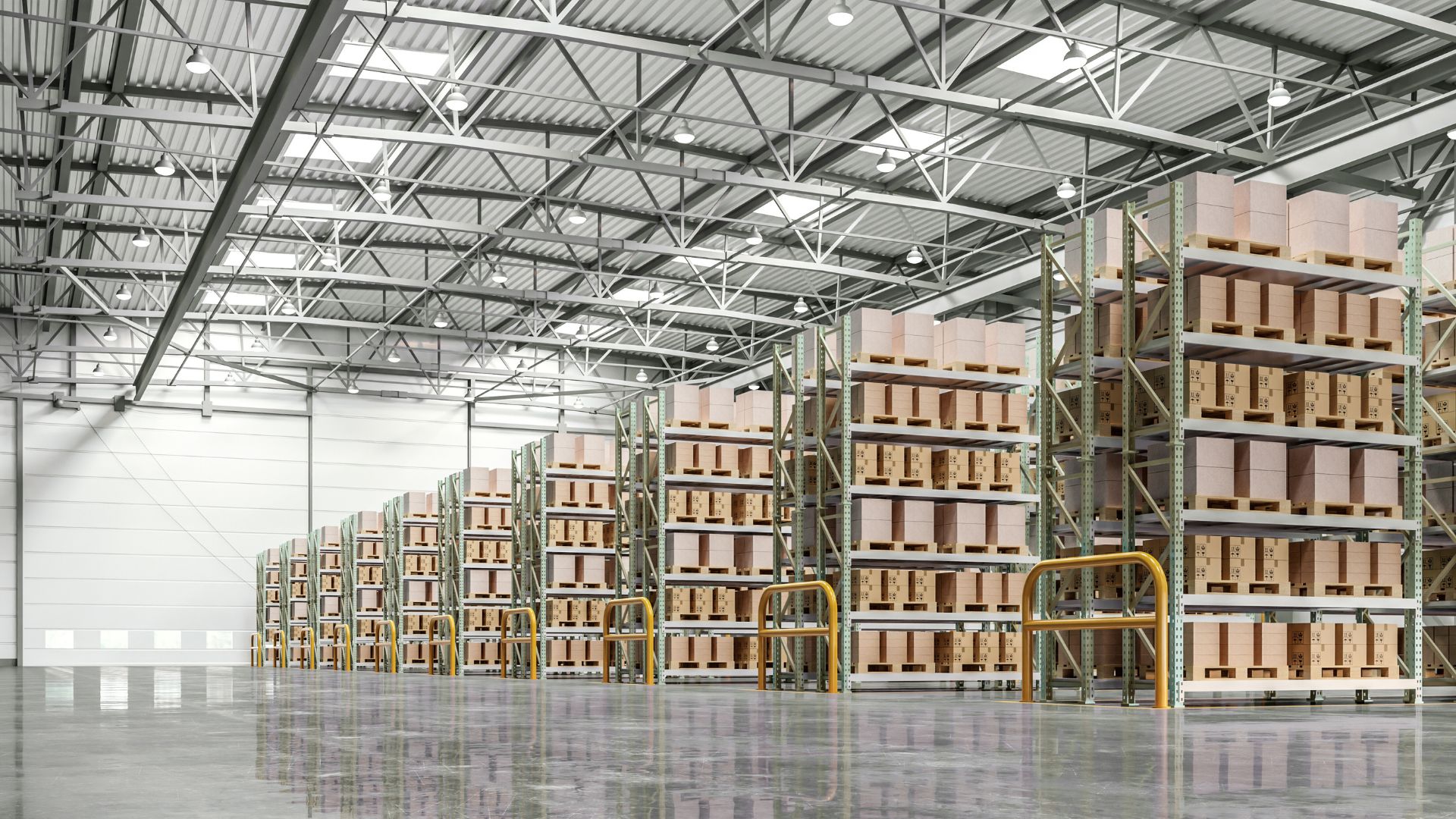
Implementing a few disciplined protocols can significantly extend the life of your equipment and inventory. These practices ensure your storage system operates at peak performance.
Here are the standards you should enforce:
Conduct Regular Rack Inspections
Schedule monthly audits to check for bent uprights, missing safety clips, or damaged floor anchors. Forklift impacts often compromise rack strength without causing an immediate collapse.
Impact:
Prevents catastrophic rack failure and potential employee injury.
Reduces insurance liability and maintains OSHA compliance.
Extends the lifespan of expensive racking infrastructure.
Standardize Pallet Procurement
Limit the variation of pallets entering your facility. Stick to the standard GMA 48x40 spec whenever possible. This uniformity allows for standardized rack beam spacing and simplifies forklift handling.
Impact:
Eliminates "dead air" in racks caused by varying pallet heights.
Speeds up receiving and put-away processes.
Simplifies inventory exchanges with trading partners.
Implement Weight Capacity Labeling
Clearly label beams with their maximum load capacity per pair. Ensure operators know the difference between the rated capacity of the rack and the rated capacity of the pallet itself.
Impact:
Prevents overloading that causes beam deflection.
Empowers forklift operators to make safe placement decisions.
Clarifies limits for temporary staff or new hires.
With your operational protocols in place, you are now equipped to make the capital decision of selecting the ideal storage architecture.
How to Choose the Right Pallet Storage Solution
Selecting a system is a capital-intensive decision. You must analyze your data to find the intersection of cost, density, and speed.
Analyze SKU Velocity: Fast-movers need accessible locations (Selective/Flow); slow-movers belong in high-density storage (Drive-In/Push-Back).
Calculate Budget per Pallet Position: Determine the installation cost per slot. Selective is the cheapest, while ASRS can cost hundreds per slot.
Assess Equipment Compatibility: Ensure your existing forklifts (reach trucks, counterbalanced) can operate in the aisle widths required by the new system.
Factor in Future Growth: Choose a system that is modular. You need the ability to add bays or reconfigure beam heights as your product mix changes.
How Meridian Supports Efficient Storage
Warehouses frequently struggle with the downstream effects of poor pallet procurement. Inconsistent pallet dimensions cause rack storage inefficiencies, while weak or damaged pallets create safety hazards and jam automated systems. Managing these physical specs while trying to control costs across multiple suppliers creates unnecessary complexity.
Meridian acts as your strategic partner to solve these sourcing and quality challenges. We connect you with a network of over 2,400 vetted suppliers to ensure you receive the exact pallet grade required for your storage system, whether that is Grade A for racking or custom sizes for specialized loads.
Our digital tools give you control over orders and spend, ensuring your supply chain remains predictable. Here’s why you should choose us:
Consistent Quality: Sourcing vetted Grade A pallets ensures rack safety and automation compatibility.
Custom Solutions: We source custom pallets to eliminate overhang and maximize shelf utility.
Supply Reliability: Our nationwide network prevents stockouts that disrupt warehouse staging.
Spend Visibility: Digital dashboards track costs, helping you budget for storage operations effectively.
Meridian ensures the physical foundation of your storage strategy—the pallet itself—is reliable, compliant, and cost-effective.
Conclusion
Effective pallet storage is the backbone of a high-performing supply chain. By matching your racking system to your inventory flow, strictly monitoring density metrics, and enforcing rigorous quality standards, you can reclaim valuable floor space and improve operational speed.
Meridian provides the supply reliability and quality assurance necessary to support these high-density environments. Whether you need consistent Grade A pallets for your racks or data to optimize your spend, our network delivers.
Speak to our sourcing team to request your complementary spend analysis.
FAQs
Q. What is the standard size for a storage pallet?
The standard size in North America is the GMA 48" x 40" pallet. Most racking systems, forklifts, and truck trailers are designed specifically to accommodate this footprint efficiently.
Q. How much weight can a pallet rack hold?
Capacity varies by manufacturer and design, but standard selective rack beams often hold between 2,000 to 6,000 lbs per pair. Always check the manufacturer's load rating labels (LRC) on the beams.
Q. What is the difference between FIFO and LIFO storage?
FIFO (First-In, First-Out) ensures the oldest stock is used first, vital for perishable goods. LIFO (Last-In, First-Out) uses the newest stock first, which is acceptable for non-perishables like building materials.
Q. Can I mix different pallet sizes in the same rack?
Mixing sizes is risky. It can create unsafe gaps, uneven weight distribution, and fall-through hazards. It is best to designate specific rack bays for non-standard pallet sizes and use wire decking for support.
Q. How often should pallet racking be inspected?
OSHA does not set a specific frequency, but industry best practice suggests a formal inspection at least once a year, with informal visual checks conducted weekly by warehouse staff.
Q. Do I need wire decking for my pallet racks?
Wire decking is highly recommended and often required by fire codes. It prevents pallets from falling through beams and allows water from overhead sprinklers to reach lower levels during a fire.